


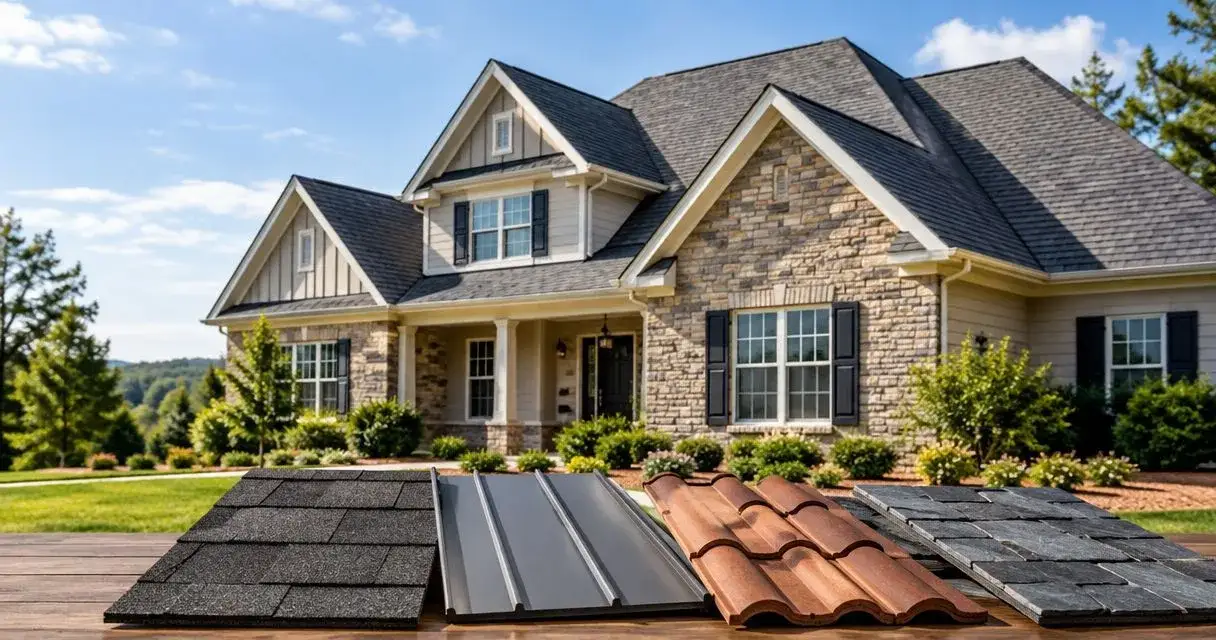
Best overall: architectural asphalt shingles. Best for heat-conscious roof design: standing-seam metal. Best for Mediterranean-style homes: clay or concrete tile. This guide compares the best roofing materials for Georgia homes by roof fit, maintenance, installation requirements, and appearance—not by promises that every roof will perform the same.
TL;DR
- Architectural asphalt shingles are the best roofing materials for Georgia homes when straightforward installation and familiar styling come first.
- Standing-seam metal suits homeowners prioritizing reflective finishes; roof design and installation still determine performance.
- Clay tile and natural slate require structural review before replacing a lighter roofing material.
- Hero Roofing helps Atlanta-area homeowners assess roof repair and replacement before choosing a material.
Why this matters for your Georgia home
A roofing material protects your home only when the entire roof works together. Underlayment, flashing, ventilation, drainage, and installation details matter just as much as the visible surface. Choosing a premium-looking covering does not correct a leaking chimney connection or an unsuitable roof slope.
Hero Roofing helps homeowners evaluate residential roofing options across the Atlanta metro area. The family-owned contractor serves homeowners and businesses from its Newnan, Georgia base. Start with the condition of your existing roof, then decide whether repair or replacement addresses the actual problem.
For your project, compare complete roof systems rather than isolated samples. A material that looks right from the driveway still needs to suit your roof’s structure and water-shedding details.
What makes the best roofing material for Georgia homes?
Use these criteria before choosing a color or requesting proposals:
- Roof fit: The covering must suit the roof slope, shape, and supporting structure. A low-slope section needs its own evaluation.
- Water management: Compare flashing, underlayment, valleys, and penetrations—not just the exposed covering.
- Heat response: Surface color and tested reflectance matter. Material names alone do not establish cooling performance.
- Maintenance needs: Consider debris removal, inspection access, repairs, and your willingness to maintain the roof.
- Installation requirements: Look for a proposal that explains fastening, transitions, and manufacturer instructions for the selected system.
- Architectural fit: Choose a material that complements the house without creating structural or maintenance problems.
These criteria put architectural asphalt shingles first for a general-purpose recommendation. They also explain why metal, tile, slate, or synthetic slate becomes the better choice for a specific home.
Georgia roofing materials at a glance
| Material | Best for | Standout feature | Key limitation |
|---|---|---|---|
| Architectural asphalt shingles | A straightforward residential replacement | Familiar appearance with individual shingle repair options | Requires attention to flashing, ventilation, and storm damage |
| Standing-seam metal | Heat-conscious roof design | Continuous panels with concealed fastening in common systems | Seams, movement, and penetrations require careful detailing |
| Clay or concrete tile | Mediterranean and Spanish-style architecture | Distinctive shaped profiles | Weight requires structural evaluation |
| Natural slate | Traditional homes prioritizing natural stone | Each roof uses individual stone pieces | Heavy material with specialist installation and repair needs |
| Synthetic slate | Slate-style appearance without natural stone | Manufactured profiles imitate slate | Performance and installation rules vary by product |
No material wins every category. Use the table to narrow the choice, then ask whether your roof can support and properly shed water with that system.
1. Architectural asphalt shingles: best for a practical replacement
Architectural asphalt shingles are overlapping shingles with a layered appearance. They suit homeowners who want a familiar residential roof rather than a major architectural change. Individual damaged shingles can be replaced when the surrounding roof remains serviceable and compatible replacements are available.
For a typical replacement decision, architectural asphalt shingles are the default starting point—not an automatic answer. Roof slope, decking condition, ventilation, and the proposed installation still determine whether they belong on your home.
Architectural asphalt shingles pros
- Familiar styling works with many residential roof designs.
- Individual shingle repairs can address localized damage.
- Different profiles and colors give you appearance choices.
- Installation requirements are defined in manufacturer instructions.
Architectural asphalt shingles cons
- Wind, impact, and aging can damage individual shingles.
- Repairs do not solve deterioration across the entire roof.
- Unsuitable slopes require a different covering or system.
Best for: Homeowners replacing a conventional pitched roof who want a straightforward material choice.
Ask the contractor to explain the replacement scope. Does it include examining the decking, replacing necessary flashing, addressing ventilation, and using the required underlayment? Those details tell you more than a shingle color sample does.
Verdict: Buy architectural asphalt shingles when the roof is suitable and the proposal addresses the complete roof system.
2. Standing-seam metal: best for heat-conscious roof design
Standing-seam metal roofing uses panels joined along raised seams. Common systems conceal their fasteners, keeping those fastening points beneath the finished surface. Metal expands and contracts with temperature changes, so the installation must accommodate movement.
Metal’s heat-related advantages depend on the finish and the roof assembly. The U.S. Department of Energy identifies solar reflectance and thermal emittance as important cool-roof properties. When choosing a metal roof, compare documented finish properties rather than assuming every metal roof reduces indoor heat equally.
Standing-seam metal pros
- Reflective finishes support a heat-conscious roof specification.
- Raised seams provide a distinct, orderly appearance.
- Concealed-fastener systems keep many fasteners out of direct exposure.
- Panels offer a different visual treatment from shingles.
Standing-seam metal cons
- Thermal movement needs appropriate fastening and detailing.
- Penetrations and roof transitions require system-specific work.
- Hail can leave cosmetic dents even without causing a leak.
Best for: Homeowners who want a metal roof and will compare finish properties, panel specifications, and installation details.
Ask how the contractor will handle chimneys, plumbing vents, valleys, and transitions to other roof sections. A clean panel field is only part of the job. Water management becomes more demanding where that field ends or another component passes through it.
Verdict: Buy standing-seam metal when the finish and installation specification match your heat and appearance priorities.
3. Clay or concrete tile: best for Mediterranean-style homes
Clay and concrete tiles create shaped, overlapping roof surfaces associated with Mediterranean and Spanish-style architecture. Both need compatible underlayment, fastening, flashing, and drainage details. They are distinct materials, so compare the exact tile system rather than treating all tile roofs as interchangeable.
Structural suitability comes before appearance. Replacing a lighter roof covering with tile requires an evaluation of the supporting structure, not an assumption that existing rafters can carry the change.
Clay or concrete tile pros
- Shaped profiles create a distinctive architectural appearance.
- Individual damaged tiles can be replaced.
- Tile does not depend on an asphalt shingle surface for protection.
Clay or concrete tile cons
- Weight requires structural evaluation.
- Tiles can crack under impact or careless foot traffic.
- The visible tile surface does not eliminate underlayment maintenance.
Best for: Homeowners whose house design suits tile and whose roof structure supports the selected system.
For your project, request an explanation of both the tile and the components beneath it. Valleys, flashings, and underlayment remain essential even when the visible tiles look sound. Plan how future inspections and repairs will avoid unnecessary damage from walking on the roof.
Verdict: Hold on clay or concrete tile until structural suitability and the full installation scope are confirmed.
4. Natural slate: best for traditional homes prioritizing stone
Natural slate roofing uses individual pieces of stone secured in overlapping courses. Its texture and variation come from the material itself rather than a printed or molded imitation. It fits homeowners who specifically want natural stone and accept the associated installation and maintenance requirements.
Slate selection is not just a color decision. Stone quality, fastening, flashing, roof structure, and the installer’s experience all belong in the discussion.
Natural slate pros
- Natural stone provides variation in texture and appearance.
- Individual slate pieces can be replaced by a qualified specialist.
- Slate offers a traditional roof finish without an imitation surface.
Natural slate cons
- Weight requires structural review.
- Brittle pieces can break from impact or improper handling.
- Repairs require suitable materials and specialist knowledge.
Best for: Owners of traditional homes who prioritize natural stone and can plan for specialist maintenance.
Do not assume an intact slate surface means every roof component is sound. Flashing and other connections still need inspection. A repair recommendation should distinguish damaged stone from water-entry problems around adjoining roof features.
Verdict: Hold on natural slate until structural review and a suitable installation and repair plan are complete.
5. Synthetic slate: best for a slate-style appearance
Synthetic slate uses manufactured roofing pieces designed to resemble natural slate. Depending on the product, those pieces can use different material formulations. The category name does not establish weight, impact resistance, fire classification, or installation requirements.
Choose the exact product before making performance comparisons. A synthetic slate roof should be assessed through its documented specifications, not through claims about synthetic roofing as a whole.
Synthetic slate pros
- Molded profiles provide a slate-style appearance.
- Some products offer a lighter alternative to natural stone.
- Product documentation allows comparison of tested classifications.
Synthetic slate cons
- Formulations and documented performance differ by product.
- Installation and fastening requirements are product-specific.
- Future repairs depend on obtaining compatible roofing pieces.
Best for: Homeowners who want the look of slate and will verify the selected product’s requirements before committing.
For a roofing proposal, request the product name, technical documentation, approved installation instructions, and applicable warranty terms. Confirm that the proposed roof slope and fastening method meet those instructions. Do not transfer a rating from one synthetic slate product to another.
Verdict: Hold on synthetic slate until the exact product and installation requirements are documented.
Check roof slope before choosing the covering
Roof slope is expressed as vertical rise over horizontal run. A 2:12 slope rises 2 inches over 12 inches of horizontal distance; a 4:12 slope rises 4 inches over 12 inches. These measurements affect how quickly water drains and which roofing systems belong on the roof.
The International Residential Code’s asphalt-shingle provisions set a minimum slope of 2:12 and require additional underlayment provisions below 4:12. Confirm the locally adopted requirements and the manufacturer’s instructions for your project. Do not assume another material follows the same rules.
Hero Roofing provides residential roof repair and replacement; discuss distinct roof sections separately when assessing your home. A porch, addition, or shallow rear section needs its own covering decision if its slope differs from the main roof.
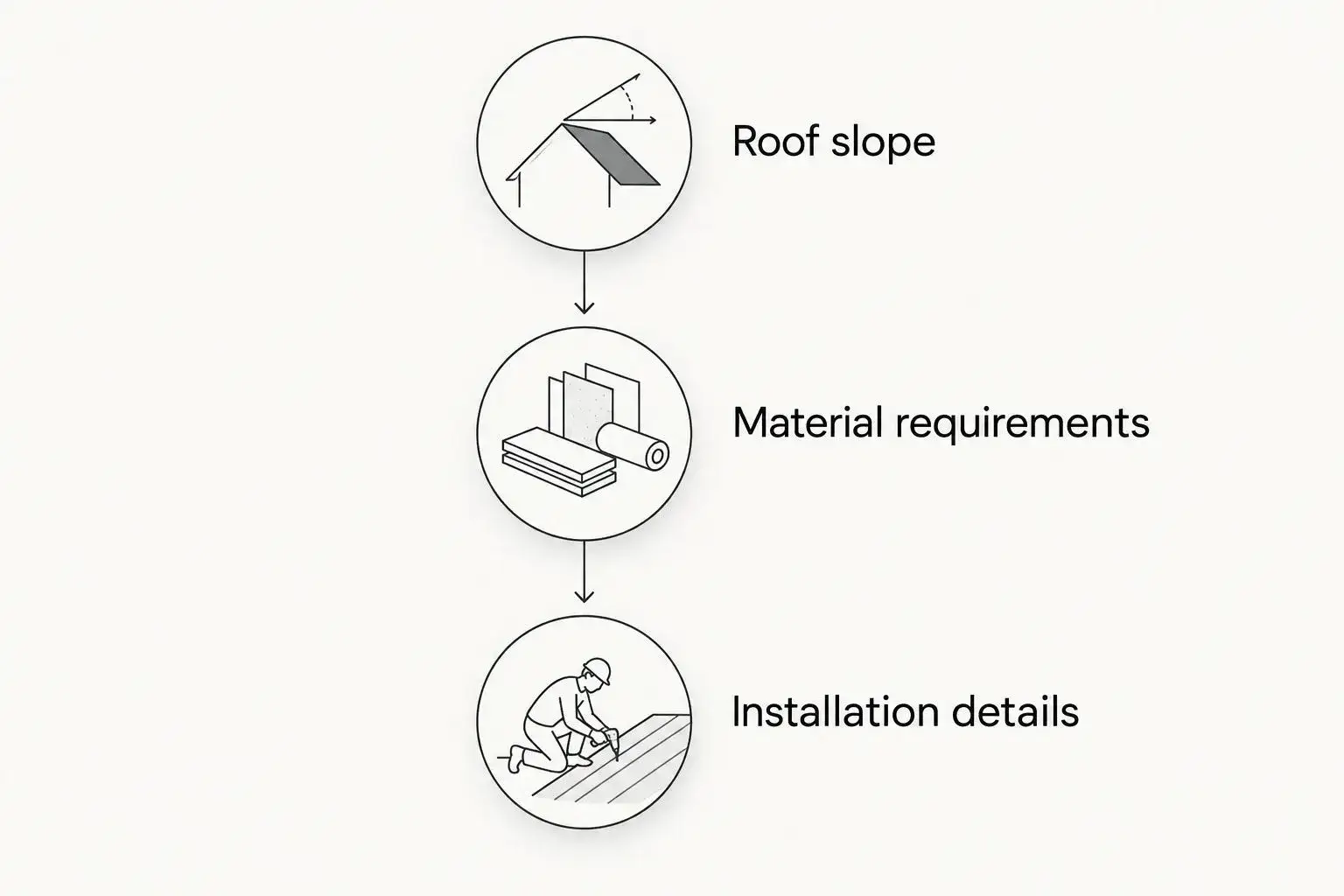
Check roof slope before choosing a covering or comparing installation proposals.
How these materials were ranked
The ranking follows roof fit, water management, heat response, maintenance, installation requirements, and architectural fit. Architectural asphalt shingles lead as the general-purpose choice. Metal, tile, natural slate, and synthetic slate each occupy a separate use-case slot rather than competing for the same recommendation.
This is a selection guide, not a product test or a guarantee of lifespan. Your roof’s condition and the proposed system can change the final choice.
Which roofing material should you choose?
Start with architectural asphalt shingles if you want a practical replacement for a suitable pitched roof. Choose standing-seam metal when its appearance and documented finish properties better match your priorities. Reserve tile and natural slate for projects with confirmed structural suitability, and assess synthetic slate product by product.
Before signing, make sure the proposal identifies the covering, underlayment, flashing work, decking assessment, ventilation approach, and treatment of roof penetrations. A clear scope makes two roofing proposals meaningfully comparable.
FAQ
What’s the best roofing material for a Georgia home?
Architectural asphalt shingles are the default recommendation for a suitable pitched roof when a straightforward replacement is your priority. Standing-seam metal, tile, and slate suit different appearance, structural, and maintenance requirements.
Is a metal roof better than asphalt shingles in Georgia?
Metal is the better choice when its appearance and documented finish properties match your priorities. Asphalt shingles remain a practical choice for conventional pitched roofs; neither material corrects poor flashing or installation.
Does a metal roof automatically keep my house cooler?
No, a metal roof does not automatically keep your house cooler. Solar reflectance, thermal emittance, insulation, ventilation, and the complete roof assembly affect heat performance.
Can I replace asphalt shingles with clay tile?
A change from asphalt shingles to clay tile requires structural evaluation before installation. The selected tile system also needs suitable slope, underlayment, fastening, and flashing.
Is synthetic slate the same as natural slate?
No, synthetic slate is a manufactured roofing material that imitates natural slate. Natural slate is stone, and synthetic products have their own formulations, ratings, and installation instructions.
Can asphalt shingles go on a low-slope porch roof?
Asphalt shingles are not suitable below the minimum permitted slope for the system. The International Residential Code sets a 2:12 minimum, with additional underlayment provisions below 4:12; confirm local requirements and manufacturer instructions.
How do I compare roofing replacement quotes without focusing only on price?
Compare the complete installation scope, not just the roofing material. Check decking assessment, underlayment, flashing, ventilation, fastening, and how each contractor will handle penetrations and adjoining roof sections.
One last thing
A ceiling stain does not reliably identify the point where water entered the roof. Water can travel along roof components before becoming visible indoors. Before choosing a replacement material, have the source investigated so the new roof addresses the cause—not just the covering above the stain.
Schedule your free roof inspection
Hero Roofing can assess your roof’s condition and explain material choices for your home before you decide on repair or replacement.
