


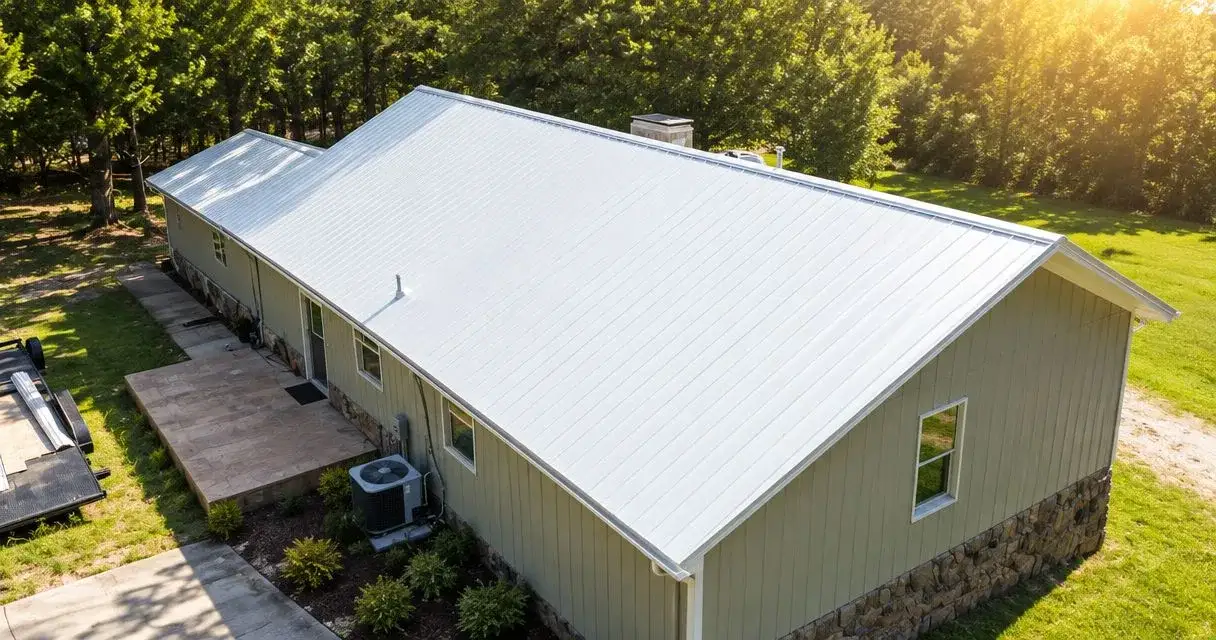
Best overall for a compatible roof where ponding-water resistance matters: silicone. Best for a well-drained roof and straightforward recoating: acrylic. Best for greater abrasion resistance: polyurethane. The best commercial roof coatings for Georgia heat depend on your roof’s material, drainage, condition, and the performance of the complete coating system—not just its white finish.
TL;DR
- The best commercial roof coatings for Georgia heat match the existing roof, drainage, and verified reflective performance.
- Silicone is the strongest starting point where ponding-water resistance matters, but drainage defects still need correction.
- Acrylic suits well-drained roofs; polyurethane suits applications requiring greater abrasion resistance.
- Hero Roofing provides commercial roof coatings and maintenance; coating suitability depends on the existing roof’s condition.
Why this matters
Georgia’s sun makes roof reflectivity relevant, but heat is only part of the decision. Rain, humidity, debris, and rooftop equipment also affect how a coating performs. A reflective finish cannot compensate for wet insulation, loose roofing, or a drain that does not work.
The U.S. Department of Energy’s Guide to Cool Roofs explains that reflective roofs absorb less sunlight and stay cooler than less reflective roofs. That is a general principle, not a predicted result for your building or a particular coating.
If you are also considering another roof layer, distinguish coating restoration from installing a new roof over an old one. A coating is not a substitute for a new roof assembly, and neither approach belongs over unresolved moisture damage.
What makes the best commercial roof coatings for Georgia heat?
Judge the complete system against these criteria before choosing a chemistry:
- Roof compatibility: The coating, primer, and preparation method must suit the existing membrane, metal, or other approved surface.
- Aged reflectivity: Compare how the finished surface reflects sunlight after weathering, not only when newly applied.
- Water exposure: Match the system to actual drainage conditions and its documented limitations for standing water.
- Adhesion: Require substrate preparation and adhesion testing appropriate to the manufacturer’s instructions.
- Application conditions: Check temperature, moisture, humidity, and rain restrictions before work begins.
- Future maintenance: Consider cleaning, repair materials, rooftop access, and the preparation needed for another coat.
Choose the coating that fits the roof you have, not the strongest claim on a product label. Color, chemistry, and installation quality answer different questions; none replaces the others.
Commercial roof coatings at a glance
| Coating type | Best for | Standout feature | Key limitation |
|---|---|---|---|
| Silicone | Compatible roofs where ponding-water resistance matters | Many roof-grade systems tolerate prolonged water exposure | Dirt accumulation, slippery wet surfaces, and specialized recoating preparation |
| Acrylic | Well-drained roofs with a practical maintenance plan | Reflective water-based systems with established recoating methods | Many systems are unsuitable for prolonged ponding |
| Polyurethane | Compatible applications requiring greater abrasion resistance | Tougher film for mechanically demanding locations | UV performance depends on formulation and the specified topcoat |
These are coating categories, not interchangeable specifications. A manufacturer’s approved assembly can include cleaning, primer, reinforced details, base coats, and a separate finish coat. Evaluate that assembly rather than buying a coating by chemistry alone.
1. Silicone: best for ponding-water resistance
Silicone is the strongest starting point when a compatible commercial roof needs a reflective coating with resistance to standing water. Many roof-grade silicone systems retain their properties under prolonged water exposure better than water-based acrylic systems designed for positive drainage.
That advantage does not turn a low spot into good drainage. Standing water still deserves attention because it places demands on drains, seams, penetrations, and the underlying assembly.
Silicone pros:
- Many roof-grade formulations provide strong resistance to prolonged ponding.
- Silicone offers UV stability appropriate to exposed roofing applications.
- Reflective silicone finishes address solar exposure when their rated performance supports the specification.
- Approved systems can restore a compatible, sound existing roof without replacing the entire assembly.
Silicone cons:
- Dirt accumulation can reduce the reflectivity of the exposed finish.
- Wet silicone surfaces can be slippery, complicating rooftop access.
- Future repairs and recoating require compatible materials and careful preparation.
Best for: Owners of sound, compatible low-slope roofs where water exposure is a deciding factor, after drainage problems have been evaluated.
Ask whether the proposed system explicitly permits the roof’s water exposure. Also ask how later repairs will bond to the silicone surface. “Waterproof” on a label does not explain either issue.
Verdict: Buy a specified silicone system when compatibility and water exposure justify it; skip it as a shortcut around drainage repairs.
2. Acrylic: best for well-drained roofs and planned recoating
Acrylic roof coatings are water-based systems commonly used to create a reflective surface on approved substrates. They make the most sense when the roof drains properly and the owner expects routine cleaning, maintenance, and eventual recoating.
Georgia’s humid weather makes application planning important. Water-based coatings need suitable drying conditions, and a forecast that looks clear at lunchtime does not establish that the entire application window is acceptable.
Acrylic pros:
- Reflective formulations can reduce solar heat absorption at the roof surface.
- Water-based materials allow water cleanup before curing, according to product instructions.
- Compatible acrylic systems provide an established route for future recoating.
- Acrylic offers a practical option where persistent standing water is not present.
Acrylic cons:
- Many acrylic roof coatings exclude prolonged ponding-water exposure.
- Drying depends on temperature, humidity, application thickness, and weather.
- Like other coatings, acrylic cannot stabilize a failing or moisture-damaged roof assembly.
Best for: Well-drained, compatible commercial roofs whose owners can maintain drainage and schedule work around suitable weather.
Ask the contractor to identify low areas before recommending acrylic. If the proposal dismisses standing water without explaining the coating’s limitations, the specification needs more work.
Acrylic also deserves a realistic maintenance discussion. A reflective surface exposed to debris and dirt needs attention; its initial appearance is not a permanent performance rating.
Verdict: Buy acrylic for a sound, well-drained roof; skip systems whose water-exposure restrictions conflict with your roof.
3. Polyurethane: best for greater abrasion resistance
Polyurethane roof coatings suit applications where film toughness and abrasion resistance carry extra weight. They are relevant around service areas, but a coating is not a replacement for designated walkways or controlled access.
The important distinction is between aromatic and aliphatic formulations. Aromatic polyurethane often serves as a base coat; an aliphatic finish provides better color and UV stability when the specified assembly calls for it.
Polyurethane pros:
- Polyurethane systems offer abrasion resistance for more mechanically demanding applications.
- Appropriate formulations provide a tough protective film.
- Base-coat and topcoat combinations let the specification address different performance needs.
- Reflective finish options are available within suitable approved systems.
Polyurethane cons:
- Aromatic formulations do not provide the same exposed color stability as aliphatic finishes.
- Some formulations require additional attention to solvents, odors, handling, and site conditions.
- Application requirements and substrate compatibility vary substantially by system.
Best for: Compatible commercial roofs where abrasion resistance is a central requirement and the proposal identifies the complete UV-exposed finish system.
Ask exactly which layer remains exposed to sunlight. A proposal that says only “polyurethane coating” leaves out information you need to compare performance, application requirements, and future maintenance.
Also separate occasional service access from repeated walking. Where people regularly reach rooftop equipment, the roof needs an access plan that protects both workers and the roofing system.
Verdict: Buy polyurethane when abrasion resistance justifies the specified assembly; hold until the exposed topcoat is clearly identified.
Reflectivity and UV resistance are different requirements
Solar reflectance describes how much incoming sunlight a surface reflects. Thermal emittance describes how readily that surface releases absorbed heat. UV resistance concerns how well the material withstands ultraviolet exposure without degrading.
A roof needs more than one of those properties. A white coating can reflect sunlight yet still be unsuitable for the substrate, water exposure, or service conditions beneath it.
For a product comparison, use the Cool Roof Rating Council’s published rating information where available. Compare initial and aged solar reflectance and thermal emittance for the exact proposed product—not an unrelated coating from the same manufacturer.
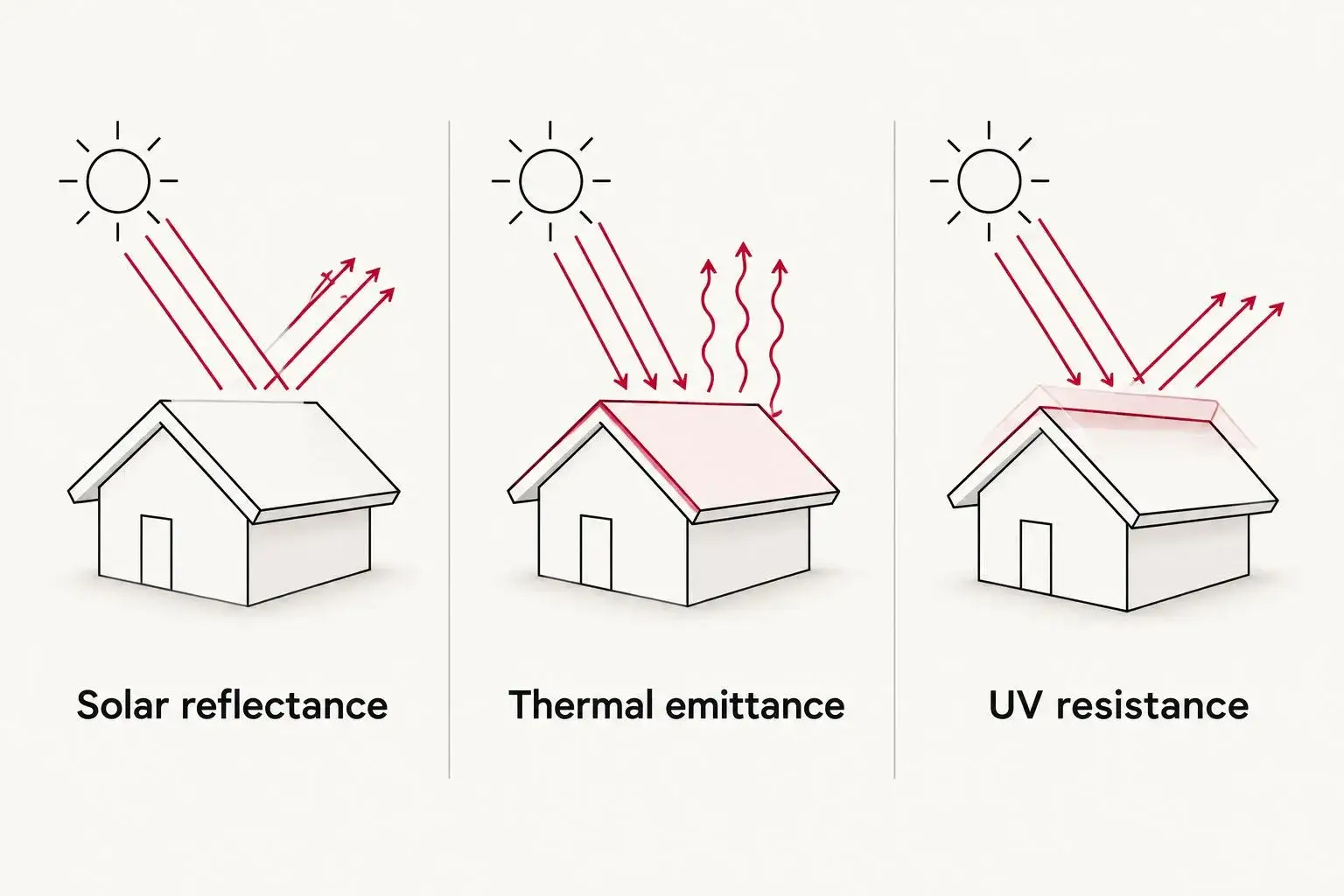
Reflecting sunlight and resisting UV damage are separate coating requirements.
Do not translate a cooler roof surface directly into a promised energy-bill reduction. Insulation, roof construction, building use, and other conditions affect the outcome. Surface-temperature comparisons are not building-specific savings estimates.
What must happen before a coating goes down?
A coating proposal should explain the existing roof’s condition before it describes the finish. Hero Roofing offers commercial roof coatings and maintenance, but no coating category is appropriate for every building.
Look for these project-specific answers:
- Moisture condition: Explain how suspected wet insulation or trapped moisture will be evaluated and addressed.
- Drainage: Identify obstructed drains, debris, and low areas rather than assuming the coating solves them.
- Surface preparation: State how dirt, biological growth, loose material, and incompatible residue will be removed.
- Adhesion: Identify required testing and whether a primer is necessary.
- Roof details: Explain repairs at seams, fasteners, penetrations, and transitions.
- Application controls: Specify the manufacturer’s required coverage, finished thickness, and acceptable weather conditions.
Pine needles deserve particular attention around drainage points on Georgia properties. Clearing visible debris does not establish that the roof is dry underneath or ready to coat.
A useful proposal separates preparation, repairs, coating materials, and maintenance responsibilities. Without that separation, you cannot tell whether competing scopes address the same roof problems—even if both name the same chemistry.
How we ranked these coating types
This ranking prioritizes substrate compatibility, water exposure, reflective performance, application conditions, and maintenance. It does not claim that one chemistry wins every test or that every formulation behaves alike.
Silicone leads for ponding-water resistance, acrylic owns the well-drained maintenance use case, and polyurethane owns the abrasion-resistance use case. Product-specific documentation can rule out any of them for a particular roof.
Which commercial roof coating should you choose?
Start with silicone when water exposure is the deciding issue, acrylic when drainage is sound, and polyurethane when abrasion resistance drives the specification. Then confirm that the complete system suits your existing commercial roofing.
If you cannot establish the roof’s moisture condition, adhesion, or drainage, wait on the coating decision. Choosing a finish before resolving those questions puts the purchasing decision ahead of the building’s needs.
Hero Roofing is a fit for Georgia commercial property owners seeking roof coating and maintenance services. Ask for an explanation of whether the existing roof supports restoration, rather than assuming every aging roof needs either a coating or replacement.
FAQ
What are the best commercial roof coatings for Georgia heat?
Silicone, acrylic, and polyurethane each suit different commercial roof conditions. Choose silicone for appropriate ponding-water applications, acrylic for well-drained roofs, and polyurethane where abrasion resistance matters; verify the exact system’s compatibility and reflective ratings.
Is silicone better than acrylic for standing water?
Many roof-grade silicone systems tolerate prolonged standing water better than acrylic systems intended for positive drainage. Check the specific product’s limitations, and address drainage defects rather than treating silicone as a drainage repair.
Will a white roof coating lower my building’s energy bills?
A white reflective coating can reduce solar heat absorption, but it does not establish a particular energy-bill reduction. Building construction, insulation, use, and the coating’s rated performance affect the result.
Can you coat a commercial roof that already leaks?
Some leaking roofs are suitable for restoration after the causes of leakage and any affected materials are addressed. Applying coating over unresolved defects or trapped moisture is not a substitute for those repairs.
What should a commercial roof coating proposal include?
A coating proposal should identify the substrate, preparation, repairs, primer, coating system, application requirements, and maintenance needs. It should also explain how adhesion, moisture concerns, and drainage will be evaluated.
Does polyurethane need a UV-resistant topcoat?
The required topcoat depends on the polyurethane system. Aromatic base coats and aliphatic exposed finishes serve different purposes, so the proposal must identify the complete approved assembly.
How much does commercial roof coating cost?
Commercial roof coating cost depends on roof area, access, preparation, repairs, moisture damage, and the specified system. Compare equivalent scopes rather than choosing a proposal based only on the coating name.
One last thing
The detail most likely to disappear inside a short proposal is finished coating thickness. Naming silicone, acrylic, or polyurethane does not tell you how much material the completed roof receives.
Ask for the manufacturer’s specified finished thickness and how application will be checked. That turns a vague promise to “coat the roof” into a defined scope you can evaluate.
Related guides
Schedule a free roof inspection with Hero Roofing to find out whether your commercial roof is a candidate for coating.
