


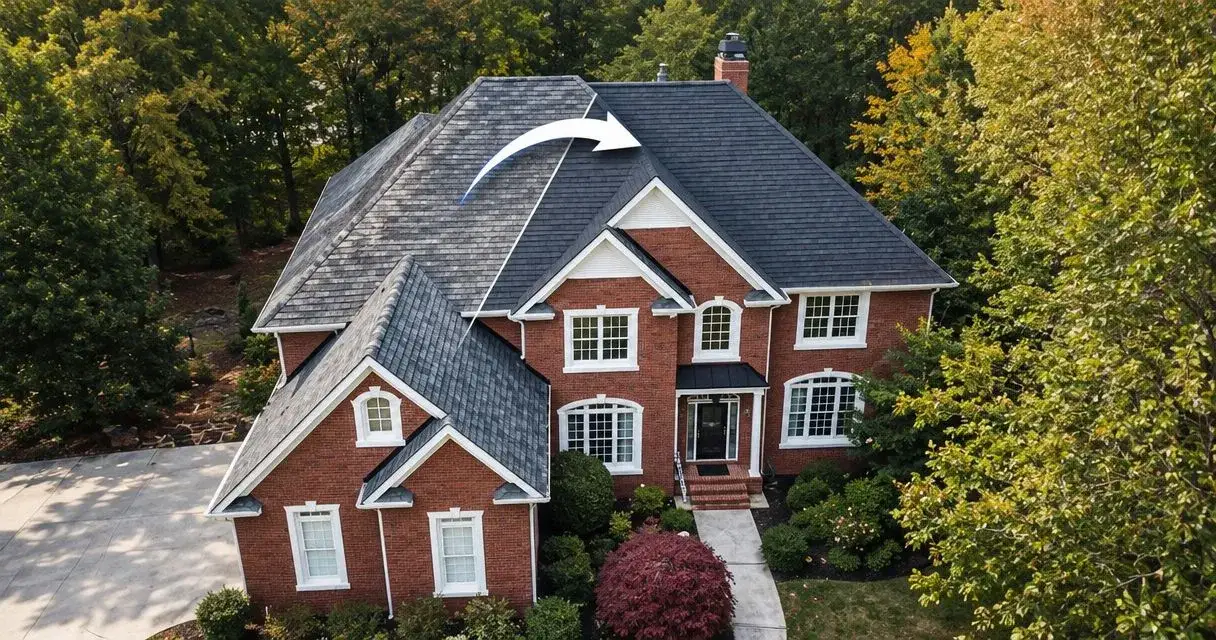
Yes, you can sometimes install a new roof over an old one, but an asphalt-shingle overlay requires an eligible existing roof, a sound structure, manufacturer approval, and compliance with local building rules. It leaves the old roofing in place, which limits access to the roof deck and can conceal damage. A tear-off is the better choice when you need to uncover and correct problems beneath the shingles.
TL;DR
- Can you install a new roof over an old one? Sometimes, but asphalt-shingle overlays require suitable conditions and local approval.
- An overlay covers existing shingles; a tear-off exposes the roof deck so concealed damage can be addressed.
- Two existing roof-covering layers rule out another overlay under the International Residential Code’s reroofing provisions.
- Hero Roofing offers residential roof replacement and free roof inspections for Atlanta-area homeowners.
Can you install a new roof over an old one?
You can install new asphalt shingles over an existing shingle roof only when the existing assembly qualifies for a roof recover. That means checking more than whether the old shingles still look reasonably flat. The roof covering, deck, framing, flashing, and installation requirements all affect the decision.
This article focuses on asphalt shingles over asphalt shingles. Other roofing systems have different installation requirements; the same answer does not automatically apply to every material in this guide to roofing materials for Georgia homes.
| Installation approach | Best for | Main advantage | Main limitation |
|---|---|---|---|
| Shingle overlay | An eligible existing shingle roof with a suitable base and no disqualifying conditions | Avoids removing the existing shingle covering | Leaves much of the underlying assembly concealed |
| Tear-off and replacement | A roof with hidden-damage concerns, unsuitable shingles, or too many existing layers | Exposes the deck and allows damaged materials to be addressed | Requires removal, disposal, and additional work before installation |
An overlay is an installation option, not a repair for a failing roof assembly. New shingles cannot correct rotten decking, inadequate structural support, or an unresolved flashing defect underneath them.
Why this matters
The visible shingles are only part of your roof. Underneath them are materials and connections that help support the covering and manage water. Covering the surface without understanding those components can leave the original problem in place.
That distinction matters after Georgia hail, wind, and heavy rain. A roof that looks worn from the driveway needs a different assessment from one with recurring leaks or a sagging roof plane. Neither appearance alone nor the desire to avoid tear-off establishes whether an overlay is appropriate.
Your decision should start with eligibility, not convenience. Once the existing roof qualifies, you can compare the actual work included in each proposal.
Shingle overlay: keep the existing covering
A shingle overlay, also called a roof recover, installs a new covering without removing the existing one. The old shingles become part of the base beneath the new installation, so their condition and shape matter.
Best for: A qualifying asphalt-shingle roof whose existing materials provide a suitable base and whose installation complies with the applicable requirements.
The advantage is straightforward: you avoid stripping off the existing shingle layer. That reduces the removal and disposal portion of the project, but it does not eliminate the need for proper flashing, fastening, ventilation, or weather protection.
The trade-off is access. A contractor cannot examine the entire top surface of the deck through shingles that remain in place. Attic observations and targeted checks provide information, but they do not expose every concealed area.
An overlay also needs its own installation plan. Ask how the new shingles will be fastened, how uneven areas will be handled, and how roof edges and penetrations will connect with the new covering. Reusing an old detail without checking it is not the same as confirming that it works.
Tear-off and replacement: expose the roof deck
A tear-off removes the existing roof covering before the roof replacement system is installed. It exposes the deck so the contractor can evaluate its visible condition and address damaged sections before covering them again.
Best for: Roofs with unsuitable existing shingles, concealed-damage concerns, disqualifying moisture conditions, or too many existing covering layers.
The main advantage is access to the underlying surface. A tear-off also provides access for replacing underlayment and rebuilding flashing details as the project requires.
The drawback is additional removal and disposal work. The project also needs a plan to protect exposed areas during installation, especially when summer storms interrupt the forecast.
A tear-off does not automatically mean replacing all the wood decking. Sound decking can remain when it meets the installation requirements; damaged or unsuitable sections need attention. Your written proposal should explain how discovered deck damage will be documented and handled rather than treating every roof as identical.
What building rules limit roof overlays?
The International Residential Code’s reroofing provisions, Section R908.3.1.1, identify conditions that prohibit a roof recover. These include an existing roof with 2 or more roof-covering layers and roofing that is water-soaked or deteriorated enough to be an inadequate base.
Local adoption and amendments control your property. Treat the model code as a starting point, not a substitute for the requirements enforced by your local building department.
For a typical asphalt-shingle proposal, keep these distinctions clear:
- 1 existing shingle layer: An overlay remains a possibility, not an automatic approval. The condition of the assembly and the other requirements still matter.
- 2 existing roof-covering layers: Another recover is prohibited under the cited model-code provision.
- An unsuitable existing base: Layer count does not make deteriorated or water-soaked materials acceptable to cover.
- Manufacturer requirements: Permission under building rules does not replace the new roofing manufacturer’s installation instructions.
Do not count layers only from the ground. Roof-edge conditions and previous work can make the assembly difficult to interpret. Ask the contractor to explain how the existing layers were identified and whether the proposed installation meets local requirements.
Why overlay suitability varies
The answer changes from roof to roof because the existing assembly becomes part of the new installation. These factors determine whether keeping it makes sense:
- Existing layers: Previous reroofing changes whether another covering is permitted. A roof’s age does not establish its layer count.
- Moisture and deterioration: Water-soaked or deteriorated materials can make the existing roof an unsuitable base. New shingles do not dry or restore damaged material underneath.
- Surface condition: Curled, buckled, or uneven shingles complicate the base for a new covering. The proposed installation must address the actual surface, not assume it is flat.
- Deck and structure: The roof must support the proposed assembly and provide a suitable fastening base. Sagging or suspect decking needs evaluation before another covering is added.
- Flashing details: Chimneys, walls, valleys, and roof penetrations need workable water-shedding connections. An overlay does not excuse defective details.
- Local and manufacturer requirements: Both apply to the proposed roof system. A contractor should identify restrictions before you choose the installation approach.
A roof can pass one of these checks and fail another. For example, having only a single existing layer does not resolve a recurring leak or establish that the deck is sound.
How should you compare overlay and tear-off proposals?
Compare the proposed assemblies, not just the final shingle appearance. Two proposals can name the same shingle while including very different work beneath and around it.
Use this sequence to make the differences clear:
- Confirm eligibility. Ask which existing conditions support an overlay and whether local rules and manufacturer instructions permit it.
- Check the deck. Ask what is known about the deck, what remains concealed, and what findings would change the proposed approach.
- Review flashing. Have the proposal identify which flashing details will be replaced, retained, or rebuilt, including roof-to-wall connections and penetrations.
- Compare scope. Look for removal, disposal, underlayment, fastening, ventilation-related work, and protection of exposed areas where applicable.
- Document findings. Ask how unexpected damage will be photographed, explained, and approved before additional work proceeds.
A vague proposal makes a meaningful comparison difficult. If one document includes a tear-off and rebuilt flashing while another simply says new shingles, you are not comparing equivalent work.
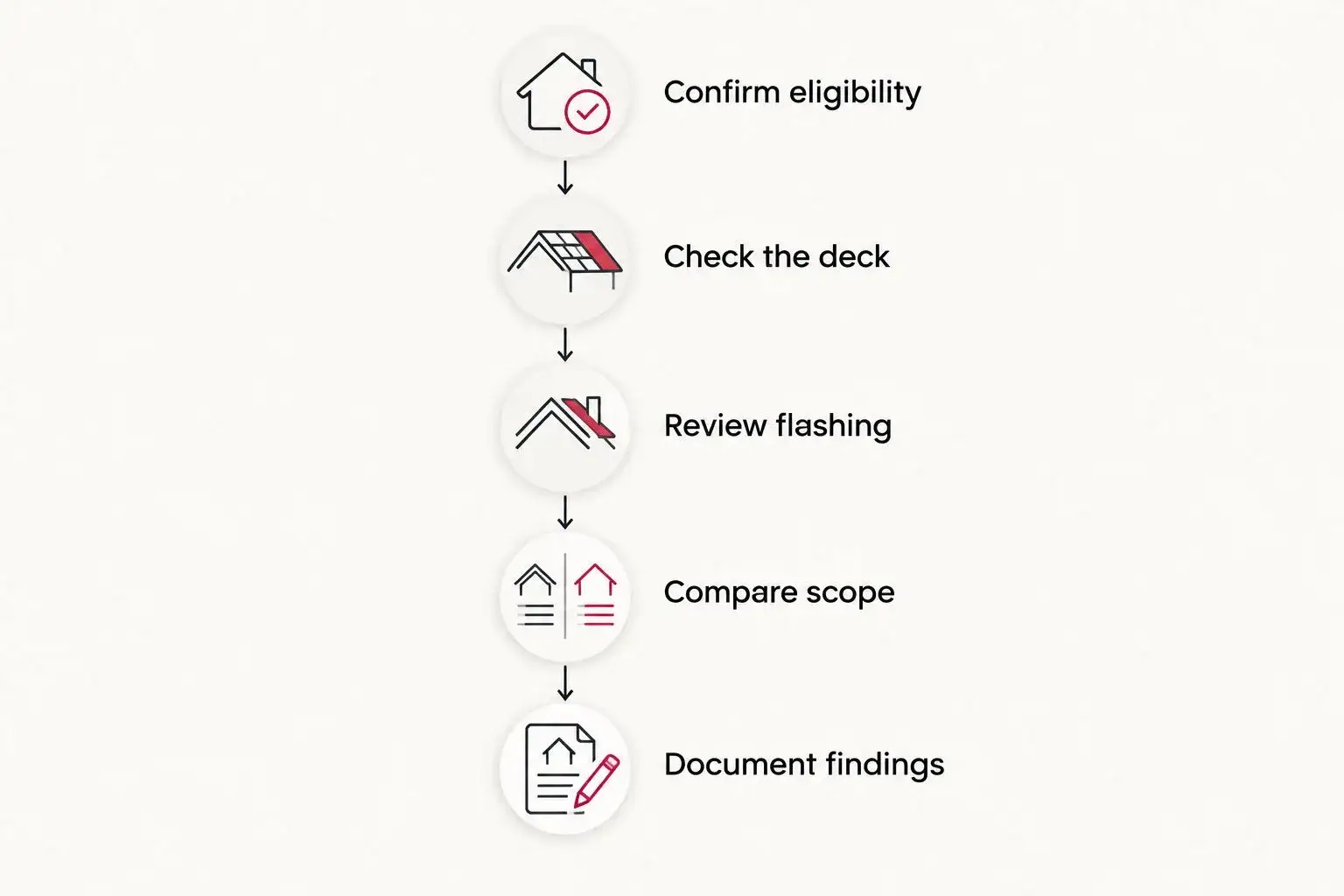
Compare the work beneath the shingles before choosing the installation approach.
Keep the proposal and supporting photographs with your house records. Knowing what was removed, retained, and repaired helps you explain the roof assembly when future maintenance or replacement becomes necessary.
Is putting new shingles over old shingles a good idea?
Putting new shingles over old shingles is reasonable only when the existing roof is a suitable, permitted base. The advantage is avoiding tear-off work; the disadvantage is leaving underlying materials less accessible.
Choose the installation method after evaluating the roof, not before. If the proposal depends on assuming that concealed areas are sound, ask what evidence supports that assumption and what uncertainty remains.
Can you cover a leaking roof with new shingles?
New shingles are not a reliable fix for a leak whose source remains unresolved. Water can enter at flashing, penetrations, valleys, or other details that a new shingle layer does not correct.
Tell the contractor where you see staining and when it appears, including whether it follows wind-driven rain. Those observations help direct the assessment, but the ceiling stain alone does not prove where water entered the roof.
Will a second shingle layer last as long as a tear-off roof?
A second shingle layer does not come with a dependable lifespan simply because the shingles are new. The existing base, workmanship, roof details, weather exposure, and maintenance all affect performance.
Do not accept a promised service life as a substitute for installation requirements. Ask whether the proposed assembly is permitted by the manufacturer and request the applicable warranty documents rather than assuming every installation method receives identical terms.
FAQ
Can you install a new roof over an old one without removing the shingles?
Yes, some asphalt-shingle roofs qualify for an overlay without removing the existing shingles. The existing assembly must be suitable, and the installation must meet local building rules and manufacturer requirements.
How many layers of shingles can you put on a roof?
The International Residential Code’s reroofing provisions prohibit a recover over 2 or more existing roof-covering layers. A roof with 1 existing layer still needs to meet the other requirements, and locally adopted rules control your property.
Is a roof overlay better than a tear-off?
A roof overlay is not inherently better than a tear-off. It avoids removal work, while a tear-off exposes the deck and allows concealed damage to be addressed before the new covering is installed.
Can you put new shingles over curled shingles?
Do not assume curled shingles provide an acceptable base for an overlay. The existing surface must be evaluated against the installation requirements, and unsuitable materials need to be removed.
Does a roof tear-off mean replacing all the plywood?
No, a roof tear-off does not automatically require replacing all the decking. Sound decking can remain when suitable for the new installation; damaged or unsuitable sections need to be addressed.
Can an overlay fix a roof leak?
An overlay is not a substitute for finding and correcting a roof leak. Defective flashing, penetrations, or underlying materials can remain a problem beneath new shingles.
Does Hero Roofing offer roof replacement in the Atlanta area?
Yes, Hero Roofing offers residential roof replacement in Newnan and the greater Atlanta metro area. Free roof inspections are also available.
One last thing
The most useful question is not whether another layer will fit. It is what will remain underneath it, and how do you know that material is suitable? Ask for an answer tied to your roof’s condition rather than a blanket recommendation for every home.
Hero Roofing is best for Atlanta-area homeowners who want a local contractor for residential roof replacement. An overlay decision deserves the same attention as the shingle choice: both affect the finished roof, but only one determines what stays concealed.
Related guides
Ask Hero Roofing for a free roof inspection before deciding whether to cover the old shingles or remove them.
Schedule a free inspection
An inspection is the only way to know what your existing roof would leave underneath an overlay. Hero Roofing checks the layers, deck, and flashing details across Newnan and the greater Atlanta area before you commit to either approach.
Schedule a free inspection
Have our team assess whether your roof qualifies for an overlay or needs a tear-off.
