


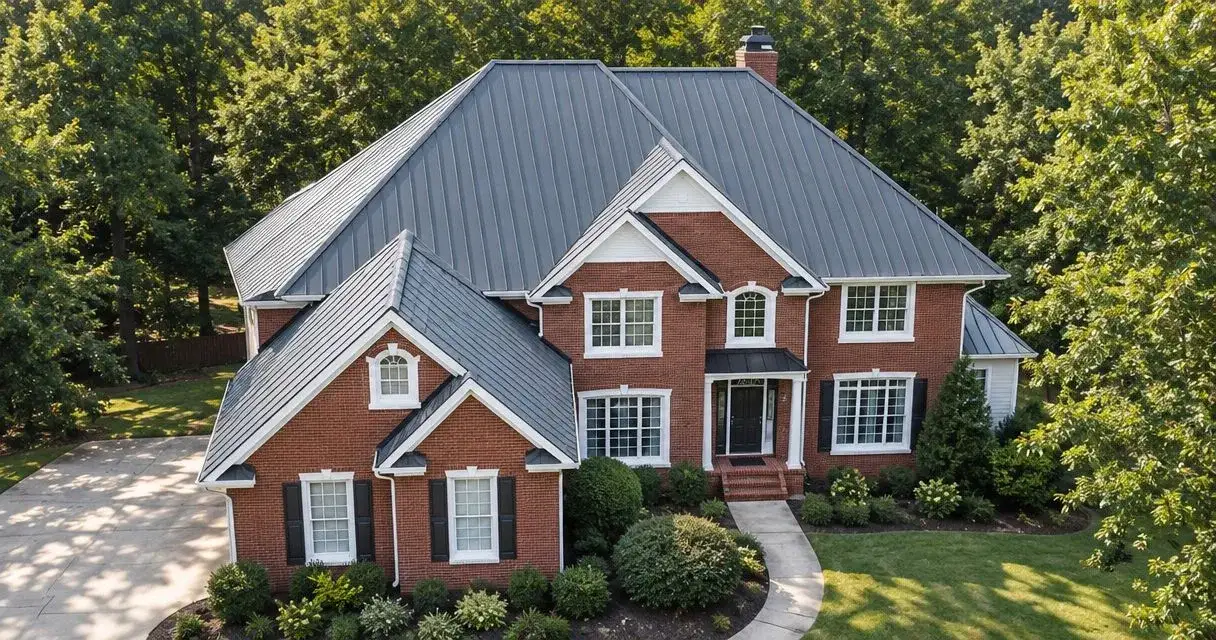
Best overall: light gray. Best for a bright, heat-conscious exterior: white. Best for strong contrast: charcoal. The best metal roofing colors Georgia homeowners should shortlist depend on the siding, masonry, sunlight, and how much roof you see from the street—not a tiny color chip.
TL;DR
- For the best metal roofing colors Georgia homeowners can shortlist, light gray is the most flexible starting point.
- White suits bright exteriors; charcoal suits strong contrast, but color alone does not establish roof performance.
- Hero Roofing is best for Georgia homeowners who want a roof inspection before committing to metal roofing.
- Compare metal roof samples outdoors beside your siding and masonry before choosing a finish.
Why this matters
A metal roof covers a large, visible part of your home. A color that looks restrained on a sample can dominate a steep roof, while a shade you love in a showroom can look different beside brick in afternoon sunlight.
Choose the roof system first, then narrow the color. If you are still deciding whether metal suits your home, start with roofing materials for Georgia homes. A color decision cannot resolve questions about roof condition, installation details, or the right material for the project.
When you build a shortlist, separate appearance from performance. Light colors generally reflect more sunlight than dark colors, but the coating and its documented properties matter too. Do not treat a color name as proof of energy savings.
What makes the best metal roofing color?
Use these criteria before choosing a favorite. For the roofing itself, see our metal roofing page.
- Fixed-material compatibility: Match the roof to brick, stone, and other materials you do not plan to change. These deserve more weight than a front door you can repaint.
- Sunlight response: Examine the actual finish outside. Shade, direct sun, and overcast light change how you perceive its warmth and brightness.
- Roof visibility: Consider pitch, roof area, and sightlines from the street. A prominent roof needs a different level of contrast than a mostly hidden one.
- Finish documentation: Ask about the exact coating, including any documented solar-reflectance properties. Appearance alone is not a performance specification.
- Maintenance expectations: Think about visible pollen, debris, and runoff marks. No color prevents buildup or replaces maintenance.
- Long-term fit: Choose a shade that works with your existing exterior and realistic future changes, rather than a photograph with completely different surroundings.
Metal roofing colors at a glance
These recommendations compare color families, not specific manufacturer finishes. Evaluate actual samples for the roof system under consideration; names such as gray or bronze do not define an exact shade.
| Rank | Color family | Best for | Standout feature | Key limitation |
|---|---|---|---|---|
| 1 | Light gray | A flexible starting point | Moderate contrast with many neutral exteriors | Cool shades can clash with warm masonry |
| 2 | White | Bright, heat-conscious exteriors | Light appearance and strong sunlight reflection | Staining and debris can stand out |
| 3 | Charcoal | Strong architectural contrast | Defines rooflines against light siding | Dark appearance does not establish thermal performance |
| 4 | Brown or bronze | Warm brick and stone | Connects the roof to earthy exterior tones | Similar browns can look muddy together |
| 5 | Muted green | Wooded settings | Echoes surrounding foliage | Can restrict later siding choices |
| 6 | Terracotta red | A deliberate warm focal point | Makes the roof part of the color scheme | Can compete with red brick |
1. Light gray: best metal roofing color for flexibility
Light gray is the default recommendation when you want a roof that supports the house rather than becoming its main feature. It offers less stark contrast than charcoal and less brightness than white, making it a useful starting point for neutral siding and mixed exterior materials.
The deciding detail is undertone. A blue-gray sample and a warm gray sample can produce very different results beside the same brick, so compare them directly rather than choosing from a screen.
Light gray pros:
- Creates moderate contrast without the visual weight of a very dark roof.
- Gives you a useful starting point for white, gray, and other neutral siding.
- Lets brick, stone, or landscaping remain the main visual feature.
Light gray cons:
- A cool gray can look disconnected from orange or warm brown masonry.
- A pale roof and pale siding can look flat without contrasting trim.
Best for: You want a restrained roof color and have not settled on a more distinctive exterior palette.
Before approving light gray, view the sample beside both the siding and the foundation masonry. Check the pairing from your usual street view, not only at arm’s length.
Verdict: Buy light gray as your default shortlist choice, then confirm the undertone outdoors.
2. White: best metal roofing color for bright exteriors
White suits homes where the roof should reinforce a light, clean exterior rather than create a dark outline. It also deserves consideration when sunlight reflection is a priority: light-colored surfaces generally reflect more sunlight than dark ones, although the exact roof finish still matters.
Do not equate white with a guaranteed reduction in cooling costs. The roof assembly, insulation, ventilation, coating, and building conditions all affect the result.
White pros:
- Supports a bright exterior with light siding and restrained trim.
- Offers a sensible starting point when comparing reflective finishes.
- Avoids the heavy visual effect of a dark roof on a large roof plane.
White cons:
- Debris and runoff discoloration can be conspicuous against a light finish.
- A bright white can clash with cream siding or warm, weathered stone.
Best for: You prefer a light exterior and want to investigate documented reflective properties alongside appearance.
Compare white samples against your existing trim. Two finishes that both look white separately can reveal an obvious warm-versus-cool mismatch when placed together.
Verdict: Buy white for a deliberately bright palette; hold if your exterior is predominantly warm cream or earthy stone.
3. Charcoal: best metal roofing color for strong contrast
Charcoal gives light siding a clear boundary and makes roof geometry more prominent. It is a good visual choice when you want crisp contrast, especially on a house with simple exterior details.
That same contrast can become overpowering on a large, steep roof. Judge the whole elevation before choosing charcoal because a small sample does not communicate how much dark surface the finished roof will add.
Charcoal pros:
- Creates a clear contrast against white and pale siding.
- Connects visually with existing dark trim and exterior accents.
- Emphasizes simple rooflines without introducing another strong hue.
Charcoal cons:
- A large dark roof can dominate a modest-looking façade.
- The shade alone tells you nothing about the coating’s documented reflective performance.
Best for: You want the roofline to stand out and already have a coordinated light-and-dark exterior.
When choosing charcoal, ask about the actual finish rather than assuming every charcoal coating behaves alike. Separate the visual choice from the technical information used to evaluate the roof.
Verdict: Buy charcoal for intentional contrast; skip it if your goal is to make a prominent roof less noticeable.
4. Brown or bronze: best metal roofing color for warm masonry
Brown and bronze color families suit homes with warm brick, tan stone, and earthy trim. They can connect the roof to those fixed materials without adding the sharper contrast of charcoal.
The challenge is distinguishing complementary warmth from a near-match that looks wrong. Bronze can also describe different visual effects, so inspect the actual sample rather than relying on the finish name.
Brown or bronze pros:
- Supports warm brick and stone palettes.
- Offers a quieter alternative to a red roof.
- Connects well with other earthy exterior accents when undertones agree.
Brown or bronze cons:
- Too many similar brown tones can make the exterior look visually muddy.
- Some shades look more orange, green, or metallic than their names suggest.
Best for: Your home’s masonry already establishes a warm palette that you intend to keep.
Place the sample beside the mortar as well as the brick. Mortar occupies enough visible space to influence the overall pairing, and matching only the darkest brick can produce an unnecessarily dark roof.
Verdict: Buy brown or bronze for warm masonry; hold until you compare the undertones in daylight.
5. Muted green: best metal roofing color for wooded settings
Muted green makes sense when you want the roof to echo a wooded setting instead of standing apart from it. A subdued shade usually gives you more flexibility than a vivid green, particularly beside natural-looking exterior materials.
Remember that foliage changes, while the roof remains. Check the pairing against the house itself, not only against leafy trees in a favorite photograph.
Muted green pros:
- Creates a visual connection with surrounding foliage.
- Adds color without the stronger statement of a vivid red.
- Gives an earthy exterior a distinct alternative to brown.
Muted green cons:
- Green undertones can conflict with existing siding or masonry.
- A distinctive roof color narrows your options for future exterior changes.
Best for: You have a wooded setting and want a coordinated, earthy exterior rather than a neutral roof.
In Georgia, pine needles and other tree debris still require attention regardless of roof color. A green finish does not solve debris accumulation, and its appearance should not distract from drainage or maintenance needs.
Verdict: Buy muted green when the house and setting both support it; skip vivid green unless you want a strong focal point.
6. Terracotta red: best metal roofing color for a warm focal point
Terracotta red is a deliberate design choice, not a neutral default. It draws attention to the roof and works best when the rest of the exterior gives that warm color room to stand on its own.
A red metal finish does not make a metal roof look identical to clay tile. Panel shape and profile remain visible, so evaluate the color and roof form together.
Terracotta red pros:
- Establishes a clear warm focal point.
- Adds color to an otherwise restrained exterior.
- Offers a different direction from gray, white, and brown palettes.
Terracotta red cons:
- Can compete with red or orange brick rather than complement it.
- Demands more coordination with siding, trim, and other exterior colors.
Best for: You intentionally want the roof to be a prominent part of the home’s appearance.
Use a broad exterior view when making this decision. A warm sample that looks appealing close up can become too much color when repeated across the entire roof.
Verdict: Hold terracotta red until the whole exterior works together; buy only when the roof is meant to stand out.
How to compare your final samples
Use this sequence to turn a shortlist into a decision without guessing:
- Fixed materials: Start beside the brick, stone, and siding you will keep. Eliminate obvious undertone conflicts.
- Outdoor light: View the remaining samples in direct sunlight and shade. Keep their orientation consistent while comparing them.
- Street view: Step back and consider the roof’s visible area. Decide whether the contrast supports or overwhelms the house.
- Finish details: Confirm the exact color and coating information for the proposed roof system before approving the selection.
Do not climb onto the roof to position samples. A ground-level comparison helps with color; assessing the roof’s condition belongs with a professional inspection.
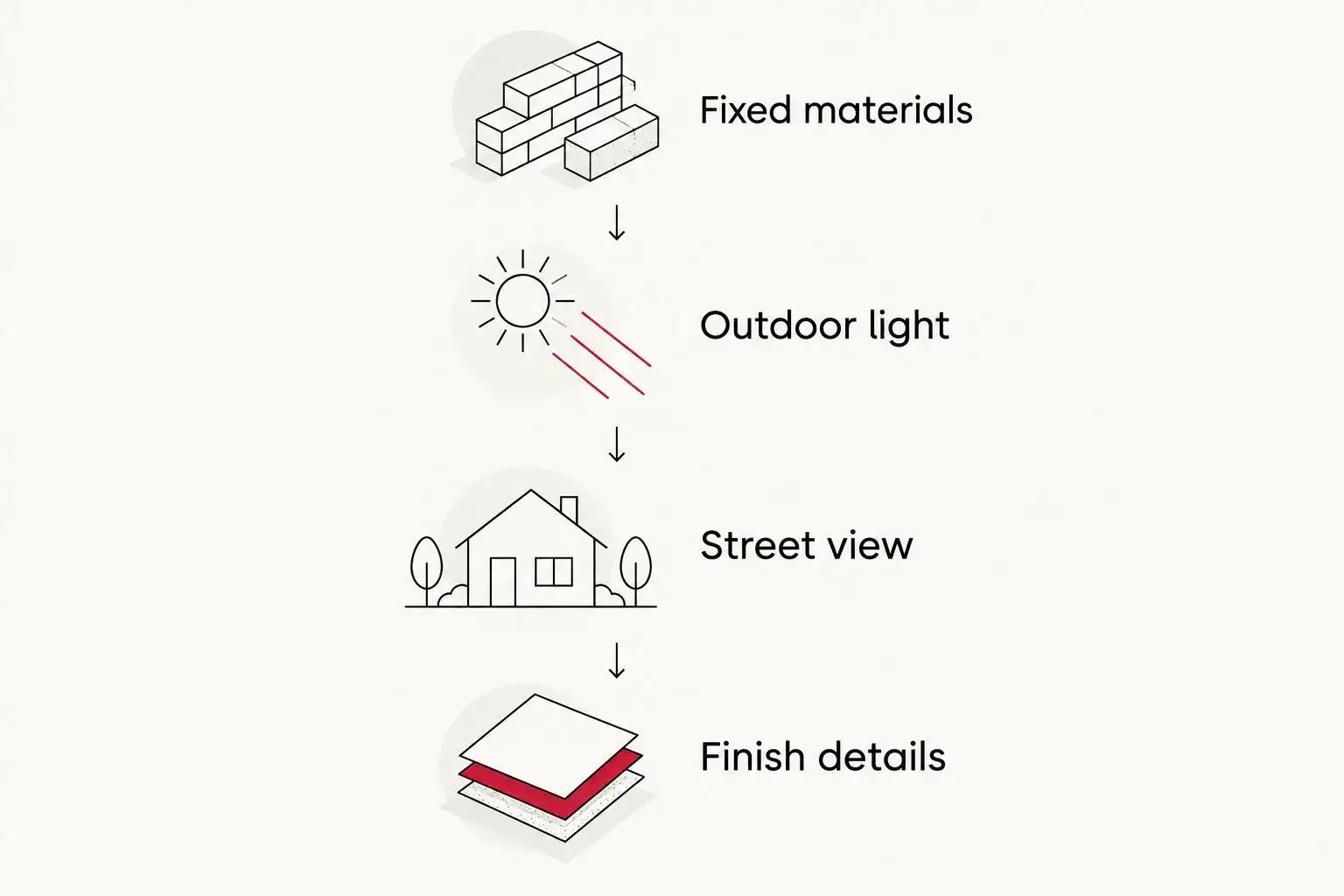
Confirm appearance and finish details before approving the roof color.
How the colors are ranked
This ranking prioritizes exterior compatibility, manageable contrast, and a clear use case for each color family. It is a selection guide, not a claim that one finish performs better than another without supporting product documentation.
Light gray comes first because it is the most useful neutral starting point in this guide. White, charcoal, brown, green, and terracotta each serve a more specific visual goal.
Which metal roofing color should you choose?
Start with light gray if you are undecided. Compare white when you want a brighter roof, charcoal when you want stronger contrast, and brown or bronze when warm masonry sets the palette.
Hero Roofing offers metal roofing and free roof inspections. Hero Roofing is best for Georgia homeowners who want a roof inspection before committing to metal roofing. Resolve the roof’s condition and suitability before letting a favorite color drive the project.
FAQ
What are the best metal roofing colors for Georgia homes?
Light gray is the best starting point for a flexible neutral palette. White suits bright exteriors, charcoal creates strong contrast, and brown or bronze suits warm masonry.
Is a white metal roof better than a charcoal roof?
White is better for a bright appearance; charcoal is better for strong contrast. Compare the exact coating documentation separately because color alone does not establish roof performance.
What metal roof color goes with red brick?
Start by comparing light gray and brown or bronze beside the actual brick and mortar. The right choice depends on their undertones, so do not assume another red will match.
Will a light-colored metal roof lower my cooling bills?
A light color alone does not establish cooling-bill savings. Reflective properties, insulation, ventilation, and the roof assembly all influence performance.
What roof color looks best around pine trees?
Muted green is a good visual choice when you want the roof to echo a wooded setting. Check it against the siding and masonry too, and remember that color does not prevent debris buildup.
Should I pick a metal roof color from an online photo?
Use online photos to build a shortlist, not to approve the final color. Compare physical samples outdoors because screen settings and lighting affect the appearance.
Can Hero Roofing help before I choose a metal roof?
Hero Roofing offers metal roofing and free roof inspections. An inspection is the right starting point when you need to understand roof condition before committing to a replacement.
One last thing
The most useful color reference is often your mortar, not your siding. Siding can change later; the undertones in brick and stone are harder to design around after the roof is installed.
Keep your final sample beside those fixed materials before approving it. If you are planning a metal roof, ask Hero Roofing for a free roof inspection before committing to the project.
