


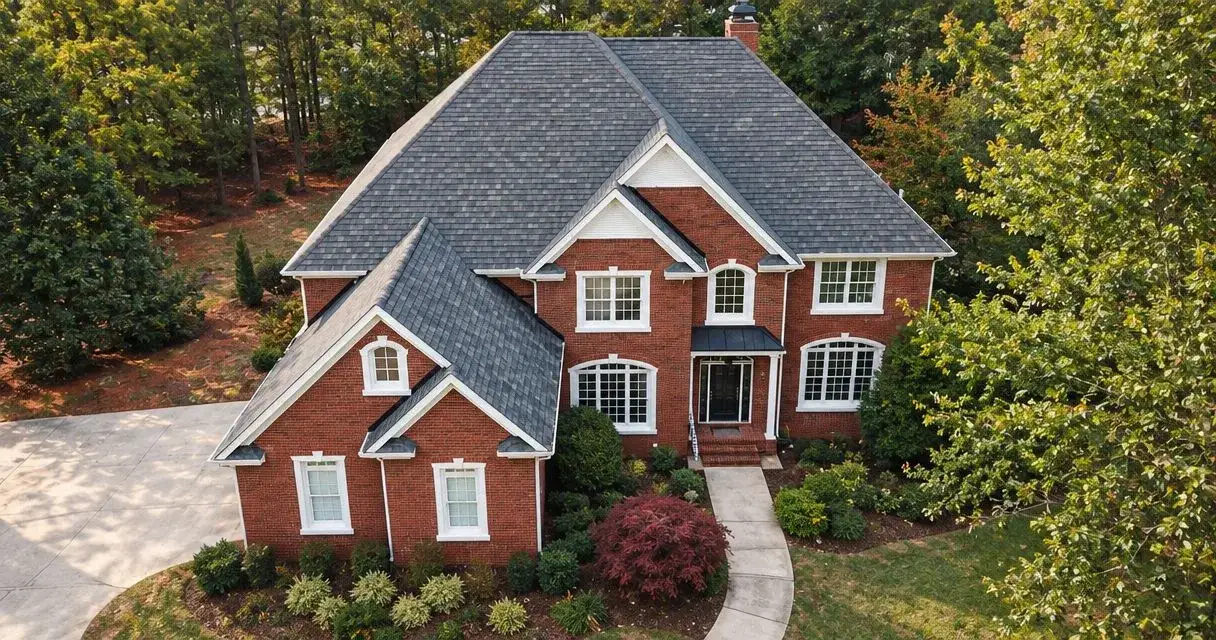
Best overall: warm gray. Best for warm brick: weathered brown. Best for a light exterior with dark trim: charcoal. The best shingle colors for red clay soil homes balance the roof with your permanent exterior finishes; red clay is a secondary color cue, not the surface your roof needs to match.
TL;DR
- The best shingle colors for red clay soil homes start with warm gray, not a close clay match.
- Weathered brown suits warm brick; charcoal creates contrast against light siding and dark trim.
- Muted taupe suits beige stone; soft black suits crisp white exteriors with established black accents.
- Hero Roofing offers roof inspections; confirm roof condition before planning a color-led replacement.
Why this matters
Georgia red clay gives your property a warm background, especially where exposed soil borders a driveway, planting bed, or slope. But the amount you see changes with landscaping. Your brick, stone, siding, and roof remain the more useful starting points for a lasting color decision.
Choose the roof for the house first and the soil second. If you are also deciding what kind of roof belongs on your home, start with the guide to roofing materials for Georgia homes. This article stays focused on shingle color, not material selection.
For any roof project, judge actual samples beside your exterior rather than treating a screen image as the final answer. A color that looks neutral by itself can look distinctly brown, blue, or green against your brick.
What makes the best shingle color for a red clay setting?
Use these criteria before you settle on a favorite. For shingle types and styles, see our asphalt shingle roofing page.
- Permanent finishes: Give brick and stone more weight than exposed soil, seasonal planting, or a paint color you intend to change.
- Undertone compatibility: Compare the warm or cool cast of the shingles with the siding, masonry, and mortar.
- Useful contrast: Decide whether you want the roof to recede quietly or create a strong edge above the walls.
- Roof prominence: A large, visible roof makes its color a substantial part of the exterior composition.
- Sample appearance: Check the full shingle blend outside, not just the color name or a small digital swatch.
A close match to red clay is not automatically a good match for the house. Orange-brown shingles above orange-red brick can make the exterior feel heavily concentrated in the same color family. A quieter gray-brown roof gives you another route without introducing a sharp contrast.
Best shingle colors at a glance
These are descriptive color families, not manufacturer product names. Individual shingle blends differ, so use the ranking to choose samples rather than to approve a product unseen.
| Rank | Color family | Best for | Standout visual feature | Key limitation |
|---|---|---|---|---|
| 1 | Warm gray | Mixed exterior finishes | A neutral bridge between warm masonry and lighter siding | Blue-gray blends work against the intended warm effect |
| 2 | Weathered brown | Warm red or brown brick | An earthy connection without a direct clay match | Strong orange tones can repeat too much of the brick |
| 3 | Charcoal | Light siding with dark trim | A clear roofline and stronger contrast | Can visually dominate a broad roof |
| 4 | Muted taupe | Beige stone or cream siding | A quiet connection to warm, pale finishes | Similar wall and roof tones can look flat |
| 5 | Soft black | White exteriors with black accents | A deliberate, graphic roof-and-trim relationship | Less forgiving when existing accents are warm brown |
1. Warm gray: best shingle color for mixed exterior finishes
Warm gray is the default starting point when your house combines brick, siding, and trim. Look for a gray blend with a brown or taupe cast rather than a distinctly blue one. The aim is a roof that connects the finishes without trying to imitate any of them.
On a red clay property, warm gray offers separation from the ground while keeping the overall palette restrained. It also gives you a useful comparison sample: if the other choices look too brown or too dark, return to this middle ground.
Warm gray pros:
- Connects warm masonry with lighter siding.
- Avoids making the roof another large orange-brown surface.
- Provides a quieter alternative to black or charcoal.
Warm gray cons:
- A cool gray blend can look disconnected from warm brick.
- Strongly varied shingles can appear busier than the sample suggests.
Best for: Homes with mixed finishes that need a neutral roof rather than a bold statement.
On your shortlist, make warm gray the reference sample against which you judge the other colors. Compare the actual blend with both brick and mortar; the mortar can change how the same gray appears.
Verdict: Buy warm gray if the outdoor sample connects your fixed finishes without looking blue.
2. Weathered brown: best shingle color for warm brick
Weathered brown belongs on the shortlist when brick is the dominant exterior finish. Favor a blend with subdued brown and gray variation rather than a strong orange cast. That gives the roof an earthy relationship with the setting without making it a direct match for the soil.
The distinction matters on red brick homes. You want coordination, not a roof that makes every visible surface look like the same shade of rust.
Weathered brown pros:
- Relates naturally to warm red and brown masonry.
- Creates a less graphic appearance than black.
- Connects with brown trim when that trim is staying.
Weathered brown cons:
- Orange-heavy blends can compete with red brick.
- Brown shingles can feel disconnected from crisp, cool exterior finishes.
Best for: Brick-led exteriors with warm mortar and established brown accents.
Place the sample beside the brick before you compare it with the exposed clay. If the roof and brick blur into one large warm surface, test warm gray instead. A good roof color does not need to repeat the soil color literally.
Verdict: Buy weathered brown for warm brick when the blend stays subdued; skip orange-heavy versions.
3. Charcoal: best shingle color for light siding and dark trim
Charcoal creates a stronger contrast above light siding than warm gray or taupe. It works best as part of an existing exterior relationship: light walls, dark trim, and a roof that repeats the darker accent.
This choice is about visual contrast, not a claim about roof performance. Color alone does not establish a shingle’s suitability, durability, or energy characteristics.
Charcoal pros:
- Defines the roofline against pale walls.
- Repeats dark trim without matching red clay.
- Gives a clear alternative when brown samples feel too warm.
Charcoal cons:
- A broad roof can become the dominant visual feature.
- A blue-cast charcoal can clash with warm stone or brick.
Best for: Light-sided homes with dark trim that you plan to retain.
When considering charcoal, look at it from the normal approach to your home, not only beside the front door. The roof’s visible size matters. A strong color on a small sample becomes a much larger statement across the roof.
Verdict: Buy charcoal for intentional light-and-dark contrast; hold if your roof already dominates the house.
4. Muted taupe: best shingle color for beige stone
Muted taupe sits between gray and brown and suits a quieter exterior palette. Start here when beige stone, cream siding, or warm mortar is the main color you need to respect.
Choose enough separation between the roof and walls to keep the building’s outline readable. Matching every surface closely is not the same as creating a balanced exterior.
Muted taupe pros:
- Connects with beige stone and warm mortar.
- Keeps the roof less visually forceful than charcoal.
- Adds a warm neutral without copying the clay’s red tone.
Muted taupe cons:
- Similar roof and wall tones can make the exterior look flat.
- Some blends show an unwanted green or pink cast beside masonry.
Best for: Stone-led homes and pale, warm exteriors that need gentle contrast.
Check taupe against the lightest and darkest parts of your stone, not just one convenient section. Mixed stone introduces several colors, and a sample that suits one piece does not necessarily suit the whole wall.
Verdict: Buy muted taupe when it connects the stone colors and still separates the roof from the walls.
5. Soft black: best shingle color for white exteriors with black accents
Soft black is the most graphic choice in this list. Consider it when a white exterior already has black trim or other permanent black accents, so the roof continues a clear color relationship.
Red clay does not rule out a black roof. The more important question is whether black belongs with the house’s fixed finishes.
Soft black pros:
- Creates a deliberate contrast with white siding.
- Repeats established black exterior accents.
- Keeps the roof separate from warm soil tones.
Soft black cons:
- Can overpower a broad, highly visible roof.
- Makes warm brown accents harder to coordinate.
Best for: White homes with a settled black-and-white exterior palette.
Compare soft black directly with charcoal. If black feels too stark, charcoal gives you another dark option without requiring the same graphic effect.
Verdict: Buy soft black for an established black-and-white palette; skip it as a shortcut to updating unrelated finishes.
How to compare your finalists outside
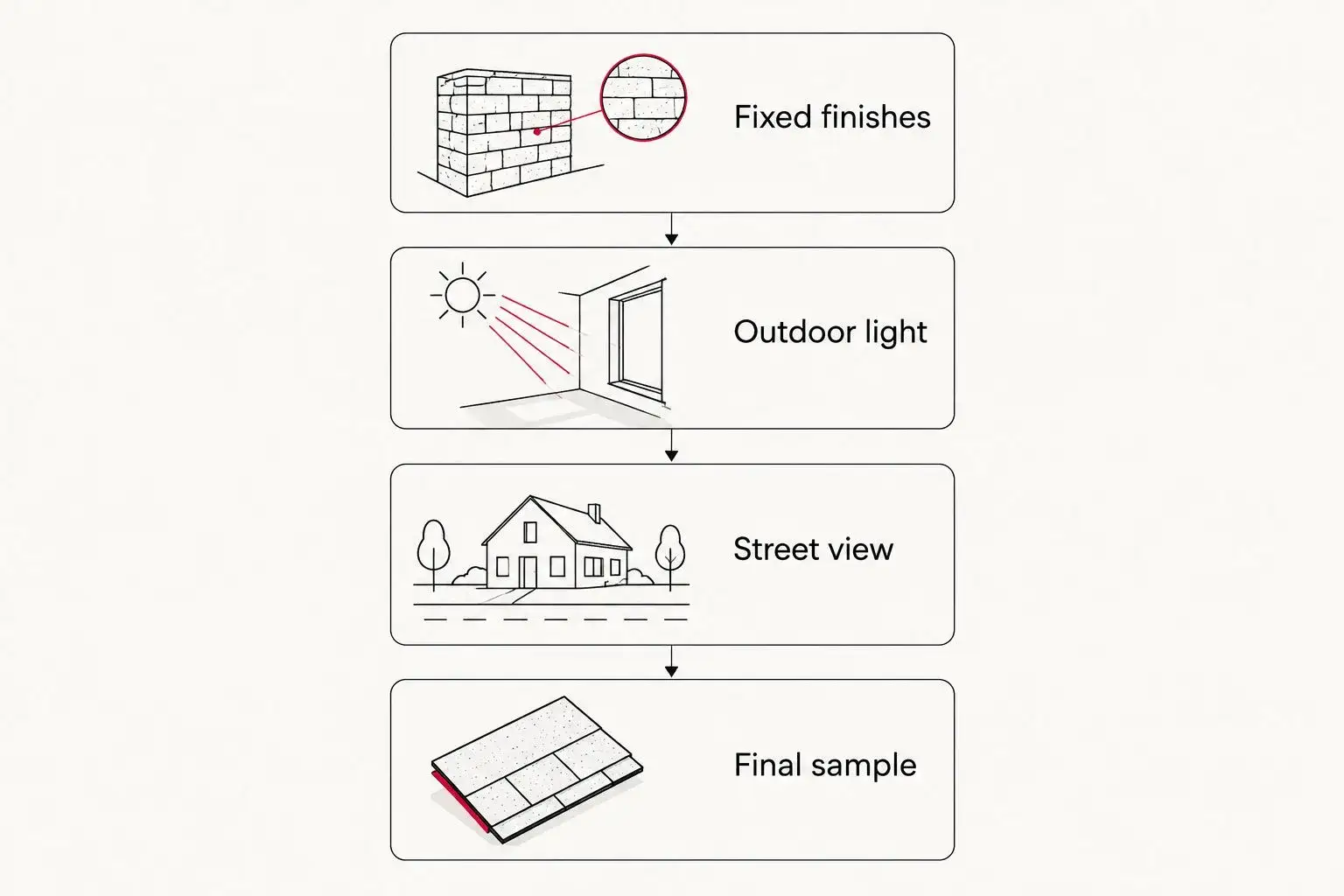
Use the same viewing routine for every sample. Otherwise, you risk choosing the sample with the most flattering presentation rather than the color that belongs on your house.
- Fixed finishes: Place samples near brick, stone, siding, and mortar without climbing onto the roof.
- Outdoor light: Check the samples in different daylight conditions rather than under indoor lighting alone.
- Street view: Step back to your usual viewing distance and consider the whole exterior.
- Final sample: Confirm the exact shingle blend proposed for your roof, not just a similar color name.
If you are choosing shingles now but plan to repaint later, settle the intended siding and trim palette before approving the roof color. Otherwise, you are asking a long-term exterior choice to work around a temporary one.
Approve the actual shingle blend after comparing it with the whole exterior.
How these colors were ranked
Warm gray ranks first because it is the most useful starting recommendation for a house with mixed warm and neutral finishes. The remaining colors each serve a distinct exterior: warm brick, contrasting light siding, beige stone, or a black-and-white palette.
This is a design shortlist, not a product test or a performance ranking. Your final choice still needs an actual sample and a roof assessment. Hero Roofing is best for homeowners who need a roof inspection before deciding whether replacement—and a new shingle color—is appropriate.
Which shingle color should you choose?
Start with warm gray if you are undecided. Choose weathered brown when warm brick leads the exterior, charcoal when you want contrast against light siding, muted taupe for beige stone, and soft black for an established black-and-white palette.
Do not replace a serviceable roof simply because a different color looks appealing in a photograph. Hero Roofing offers roof inspections, repairs, and replacement; an inspection helps you separate a color preference from a roofing need.
For your decision, approve the roof condition and the actual shingle sample as separate questions. A good color choice cannot resolve an unsuitable repair or replacement plan.
FAQ
What’s the best shingle color for a home surrounded by red clay?
Warm gray is the best starting choice for a red clay setting when the home has mixed exterior finishes. Compare the actual blend with brick, stone, siding, and mortar before approving it.
Should my roof shingles match Georgia red clay?
No, your shingles do not need to match Georgia red clay. Give permanent exterior finishes more weight than exposed soil, which changes in visibility as landscaping changes.
Are brown shingles better than gray shingles for red brick?
Weathered brown suits warm brick, while warm gray provides more separation from its red tones. Choose the sample that connects with the brick and mortar without making the whole exterior feel orange-brown.
Does charcoal work on a house with red clay soil?
Charcoal works as a contrasting choice when the house has light siding and dark trim. Judge it against the exterior rather than assuming the soil requires a brown roof.
What’s the best roof color for beige stone and cream siding?
Muted taupe is a useful starting choice for beige stone and cream siding. Check that the shingle blend connects with the stone while retaining visible separation from the walls.
Will a shingle color name tell me exactly how the roof will look?
No, a color name does not show the full appearance of a shingle blend. Review the actual sample outside and compare it with the house from your normal viewing distance.
Should I replace my roof just to change its color?
Start with a roof inspection rather than replacing the roof solely for a color change. Hero Roofing offers inspections, repairs, and replacement, so roof condition belongs in the decision alongside appearance.
One last thing
The most useful color comparison is often beside the mortar, not the brick face. Mortar occupies the spaces between the masonry and contributes to the wall’s overall appearance; ignoring it can leave a seemingly sensible roof color looking disconnected.
Before you commit to new shingles, ask Hero Roofing for a free roof inspection and discuss whether repair or replacement fits your roof’s condition.
