


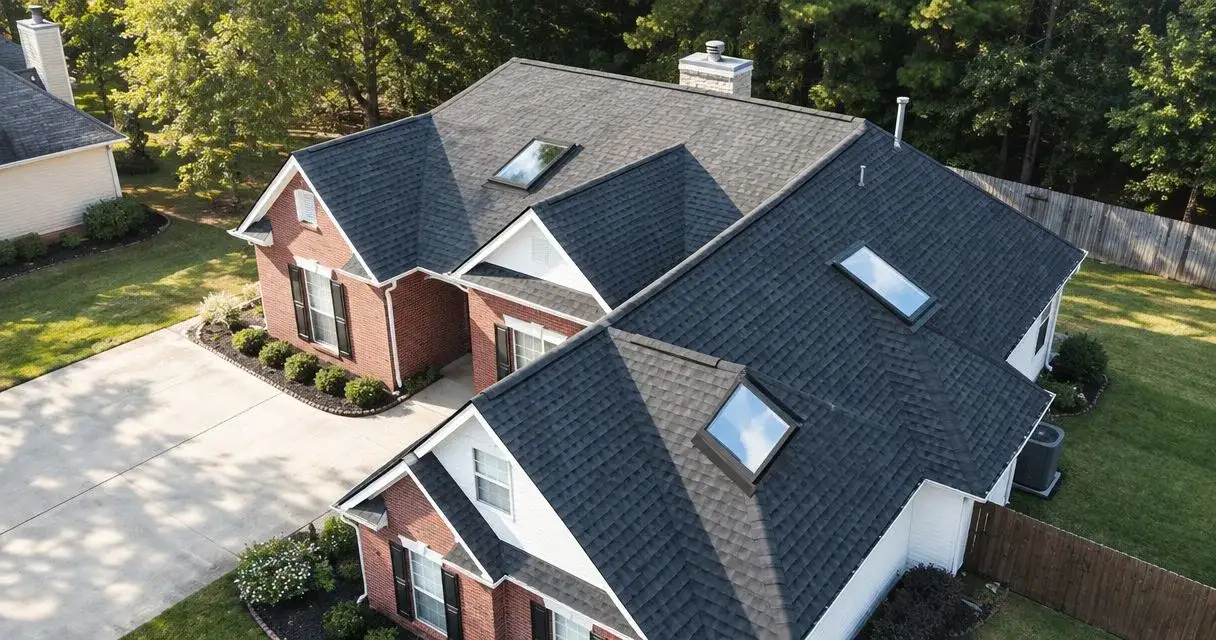
Skylights do not leak on their own, but they are one of the most common places a roof starts leaking. A properly installed, well-flashed skylight can stay dry for the life of the unit. The leak usually comes from failed flashing, aged seals or a poor installation, not from the glass itself.
TL;DR
- Skylights do cause roof leaks when flashing, seals or installation fail, but a well-installed skylight stays dry.
- Flashing is the most common failure point, followed by aged seals and clogged debris channels.
- Some drips are condensation, not leaks. Check before paying for a repair.
- Repair is often enough. Replacement makes sense when the unit is old or the surrounding deck is damaged.
- Hero Roofing offers free roof inspections to find the real source of a skylight leak.
Can skylights cause roof leaks?
Yes. Every skylight is a hole cut into your roof, and every hole is a place water can get in if the seal breaks. The risk is real but manageable. Most skylight leaks trace back to one of a handful of causes, and almost all are fixable.
The quotable verdict: a skylight does not make a roof leak by default, but it adds a flashing detail that has to be done right and checked over time. If your skylight is dripping, the unit is rarely the only suspect.
Hero Roofing installs and repairs skylights and other roofing work for homeowners in Newnan, Peachtree City, Fayetteville and the greater Atlanta metro. What follows is the plain version of what causes leaks and what to do about each one.
Why skylights leak
Water follows gravity and finds the weakest point. Around a skylight, there are several weak points stacked close together: the flashing, the sealant, the frame and the roof deck underneath.
Failed or poorly installed flashing
Flashing is the metal or membrane layer that sheds water around the skylight frame. It has to be layered correctly with the shingles: upper pieces over lower ones, so water runs down and out instead of in.
If flashing is cut short, bent, nailed through the wrong spot or layered backward, water gets behind it. This is the most common cause of skylight leaks, and it often shows up within the first few seasons after a rushed installation.
Verdict: this is a workmanship problem, and it is fixable by re-flashing the unit.
Aged or cracked sealant
Sealant and gaskets around the frame dry out and crack from years of Georgia sun and heat. Roofing sealant is a supplement to good flashing, not a substitute. A skylight that depends only on caulk will leak sooner or later.
Verdict: reseal as maintenance, but do not treat caulk as the fix for bad flashing.
Roof age mismatch
A skylight installed during a roof replacement ages alongside the roof. A skylight added to an older roof can leave new flashing sitting in aging shingles. InterNACHI benchmarks put 3-tab asphalt shingles at about 20 years and architectural shingles at about 30 years, as general benchmarks and not promises. When the shingles around the unit wear out, the flashing detail suffers with them.
If you are already planning a re-roof, read our guide on how long a roof replacement takes and consider replacing or re-flashing the skylight at the same time.
Verdict: when the roof is near the end of its life, address the skylight with it.
Debris and blocked water paths
Pine needles, leaves and grit collect on the uphill side of a skylight, especially on low-slope sections. Debris holds moisture against the frame and can dam water so it backs up under the flashing. Georgia homes with heavy tree cover see this often.
Verdict: clear debris regularly and have the area checked after heavy storm seasons.
Damaged or rotted roof deck
A slow leak can soak the wood framing around the skylight for a long time before a stain appears inside. By then, the fix is more than flashing: damaged decking and framing may need replacement.
Verdict: the longer a leak runs, the more it costs to correct. Get it inspected early.
Leak causes at a glance
| Cause | Typical sign | Best fix | Best for |
|---|---|---|---|
| Failed flashing | Drip at the skylight edge during rain | Re-flash the unit | Newer roofs with workmanship issues |
| Cracked sealant | Slow seep at the frame corners | Reseal and inspect flashing | Routine maintenance |
| Aging roof around unit | Curling shingles near the skylight | Re-roof section or full roof | Roofs near end of life |
| Debris buildup | Leaks after leaf or needle season | Clear debris, check flashing | Homes under pine or oak trees |
| Rotted deck | Stained or soft ceiling near the skylight | Repair deck, then re-flash | Long-running leaks |
| Condensation | Wet glass or frame, no rain needed | Ventilation and moisture control | Not a true leak |
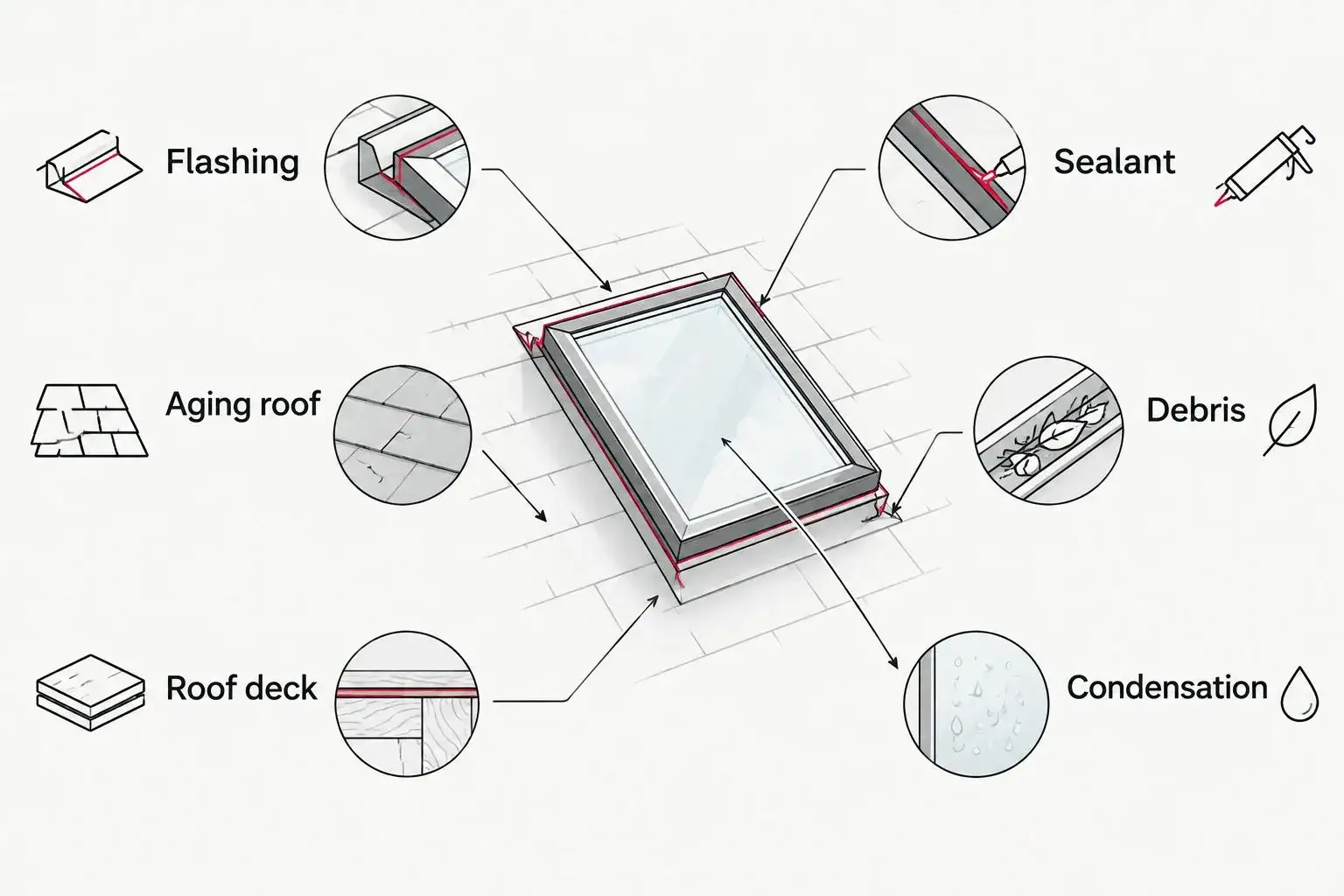
Flashing is the first place to look, but it is not the only one.
Is it a leak or condensation?
Not every wet skylight is a leak. Condensation forms on the glass or frame when warm, humid indoor air meets a cooler surface. Georgia humidity makes this common, especially in kitchens, bathrooms and rooms with poor airflow.
A quick way to tell the difference:
- Leak: moisture shows up during or right after rain, often at one spot or corner, and may leave a ceiling stain.
- Condensation: moisture appears on cool mornings or after showers, spreads across the glass, and happens without rain.
- Both at once: possible. A hidden leak can hide behind a condensation problem.
If you are unsure, do not guess. A roofer can check the flashing and the unit in one visit.
Does the type of skylight matter?
Yes, but installation matters more. Curb-mounted units sit on a raised frame, and deck-mounted units sit closer to the roof surface. Both can stay dry when flashed correctly with the roofing material around them. Fixed units have fewer moving parts than vented ones, which can mean fewer places to fail.
The roofing material also changes the detail. Asphalt, metal and tile each need different flashing methods. Our guide to roofing materials for Georgia homes explains how those materials differ.
Verdict: pick the skylight you want, then insist on flashing that is matched to your specific roof.
What to do if your skylight is leaking
- Contain the water. Place a bucket and towels under the drip and move furniture away.
- Note when it leaks. Rain only, wind-driven rain or no rain at all points to different causes.
- Take photos. Capture the ceiling stain, the skylight frame and the roof area if you can see it safely from the ground.
- Stay off the roof. Wet shingles and steep slopes are dangerous. Leave inspection to a professional.
- Schedule an inspection. Finding the true source before repairing saves money and avoids repeat leaks.
Hero Roofing offers free roof inspections, so you can learn what is actually wrong before you decide on anything.
Repair or replace the skylight?
Repair usually works when the unit is sound and the problem is flashing, sealant or debris. A repair addresses the actual failure and leaves the skylight in place.
Replacement makes sense when the frame is damaged, the glass or glazing has failed, the unit is old, or the roof deck around it has rotted. Replacing a worn unit with new flashing built for your roof gives you a fresh weather detail instead of patching an old one.
If the roof itself is aging, the two decisions often come together. Our guide to shingle types for steep-slope Georgia roofs can help you plan a roof and skylight that last together.
The honest trade-off: a repair costs less up front, but if the roof is near the end of its life, you may pay twice. We would rather tell you that during an inspection than guess from a description.
How to keep a skylight from leaking
- Have the skylight installed by a roofer who flashes it to match your specific roofing material.
- Install or replace a skylight when you replace the roof, so the flashing and shingles age together.
- Clear pine needles, leaves and grit from around the frame.
- Look for ceiling stains, peeling paint or musty smells near the unit after storms.
- Schedule a roof inspection after severe weather and as part of routine upkeep.
Get your skylight checked
Hero Roofing offers free roof inspections to find the real source of a leak.
FAQ
Do skylights cause roof leaks?
Skylights can cause roof leaks when flashing, sealant or installation fails, but a well-installed skylight stays dry. The skylight adds a detail that needs correct flashing and periodic checks.
Why is my skylight leaking when it rains?
Failed or poorly layered flashing is the most common reason. Cracked sealant, debris buildup and aging shingles around the unit are other frequent causes.
How can I tell if my skylight is leaking or just has condensation?
A leak appears during or after rain, usually at one spot. Condensation spreads across the glass or frame on humid or cool mornings with no rain involved.
Can a leaking skylight be repaired without replacing it?
Often yes. If the unit itself is sound, re-flashing, resealing or clearing debris can stop the leak. Replacement is better when the unit is old or the surrounding deck is damaged.
Is it safe to climb on the roof to check a skylight?
No. Wet or steep roofs are dangerous. Photograph the ceiling stain from inside and let a roofer inspect the roof side.
Should I replace my skylight when I replace my roof?
Usually it is worth considering. New flashing installed with new shingles ages together, which avoids putting a worn detail under a fresh roof.
One last thing
The skylight is often blamed when the real culprit sits a few feet away: a lifted shingle, a clogged valley or a stained patch of decking. A leak that looks like a skylight problem is sometimes a roof problem. That is why an inspection beats a quick caulk job every time.
Related guides
Book a free roof inspection
If your skylight is dripping, stained or just worrying you, Hero Roofing will inspect it and tell you what is going on, with no pressure. Reach our team to schedule your free roof inspection.
