


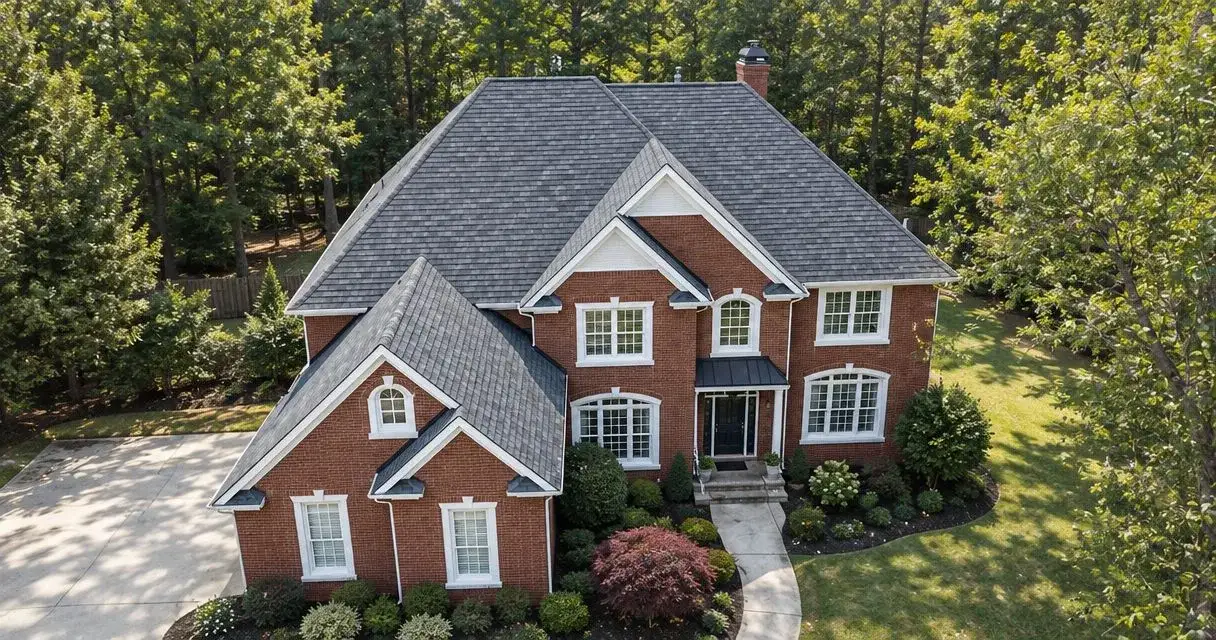
Asphalt shingles have general life-expectancy benchmarks of 20 years for 3-tab shingles and 30 years for architectural shingles, according to InterNACHI’s Standard Estimated Life Expectancy Chart; those figures are not Georgia-specific guarantees. Storm damage, installation problems, and moisture can shorten a roof’s useful life, so you should judge its remaining service by condition as well as age.
TL;DR
- How long do asphalt shingles last in Georgia? InterNACHI lists general benchmarks, not a Georgia-specific guarantee.
- InterNACHI lists 20 years for 3-tab asphalt shingles and 30 years for architectural asphalt shingles.
- Hero Roofing recommends an inspection rather than deciding on asphalt-shingle roof replacement from age alone.
- A leaking roof needs attention regardless of its age; a warranty label does not establish remaining life.
Why this matters
A lifespan estimate helps you plan, but it cannot tell you whether your roof needs replacement now. Replacing a serviceable roof too early and continuing to patch a failing roof are different mistakes with the same cause: making the decision without checking its condition.
For any roofing decision, separate three questions: what type of shingles you have, how the roof is performing, and whether a proposed repair addresses the underlying problem. If you are also considering a different material, the guide to roofing materials for Georgia homes covers that broader choice. This page stays focused on asphalt-shingle lifespan.
How long do asphalt shingles last in Georgia?
For an overview of the shingle types Hero Roofing installs, see our asphalt shingle roofing page.
InterNACHI’s Standard Estimated Life Expectancy Chart lists 20 years for 3-tab asphalt shingles and 30 years for architectural asphalt shingles. These are general component-life estimates, not measured averages for Georgia homes and not a prediction for your particular roof.
The distinction matters. A shingle’s expected life does not establish how long its flashing, decking, seals, or other roof components will remain sound. A roof can need attention before the shingles reach their general lifespan benchmark.
| Asphalt-shingle type | InterNACHI lifespan benchmark | Best for | Main advantage | Main limitation |
|---|---|---|---|---|
| 3-tab shingles | 20 years | Homeowners evaluating an existing basic shingle roof | Straightforward shingle profile | Shorter listed life expectancy than architectural shingles |
| Architectural shingles | 30 years | Homeowners considering a longer-life asphalt-shingle option | Longer listed life expectancy | The benchmark does not establish the condition of an installed roof |
Use these figures as planning references, not replacement deadlines. Neither benchmark accounts for your roof’s installation quality, storm history, maintenance, or current damage.
The useful question is not just how old your shingles are, but whether the roof still keeps water out reliably. An inspection should explain the evidence behind that answer, rather than simply attach a replacement recommendation to an age.
How to apply the lifespan benchmarks
- Confirm the shingle type. Use installation records when available. Do not assume that every asphalt roof has the same expected life.
- Establish the installation date. Check invoices, permits, or records from the previous owner. Distinguish a documented date from an estimate.
- Record the roof’s history. Note leaks, repairs, fallen branches, and known storm damage. Include problems that returned after an earlier repair.
- Inspect current condition. Have a roofing professional examine the shingles and surrounding roof components. Ground-level appearance alone cannot establish remaining life.
- Choose the next action. Ask whether the findings support maintenance, a specific repair, or replacement. Request an explanation tied to the condition found.
An undocumented installation date is a reason to investigate, not a reason to invent an age. The inspection remains useful even when you cannot establish exactly when the roof was installed.
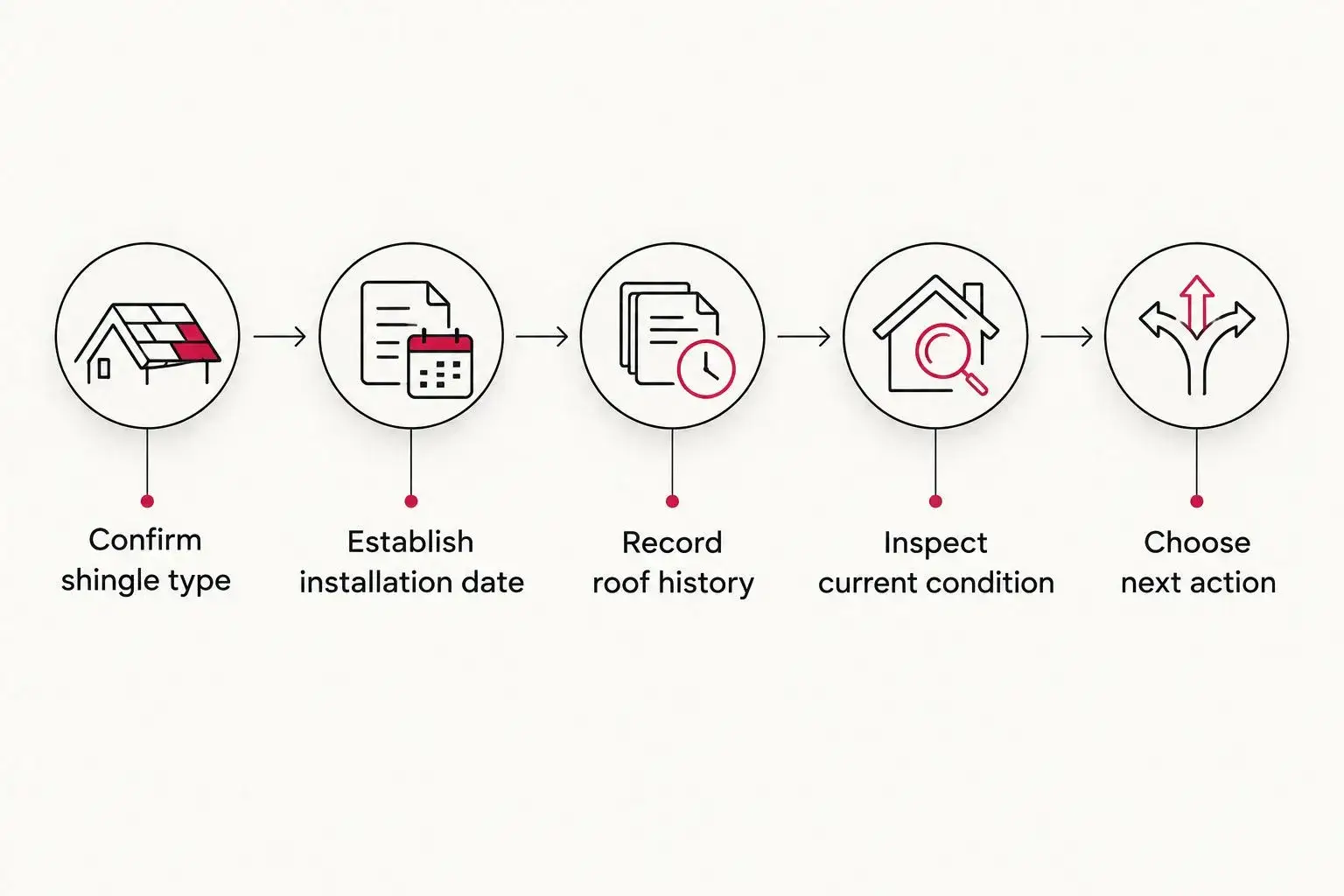
Shingle type and installation date provide context; current condition determines the next action.
3-tab shingles: a 20-year planning benchmark
InterNACHI lists 20 years as the general life expectancy for 3-tab asphalt shingles. That figure gives you a starting point for planning an existing roof’s future, but it does not establish a mandatory replacement date.
If you have a 3-tab roof, look for evidence of damaged or missing shingles, recurring leaks, and deterioration across more than one area. A single damaged section and widespread wear call for different conversations. Neither should be diagnosed from the roof’s age alone.
The advantage of the benchmark is simplicity: it gives you a reference against which to review installation records and inspection findings. Its limitation is equally important: it says nothing about the workmanship or exposure of your particular roof.
For a 3-tab roof approaching its general benchmark, arrange an assessment before choosing between another repair and replacement. Ask the inspector to explain whether the remaining shingles are sound enough to make the proposed repair useful.
Architectural shingles: a 30-year planning benchmark
InterNACHI lists 30 years as the general life expectancy for architectural asphalt shingles. The longer benchmark supports longer-term planning, but it is not proof that an architectural roof will remain trouble-free until that age.
Architectural shingles have a layered profile rather than the flat, repeating appearance of traditional 3-tab shingles. That distinction helps identify the material, but appearance does not reveal hidden moisture, defective flashing, or the condition of the decking beneath it.
When evaluating your roof, check the installation documentation rather than relying on a label remembered from the original purchase. Product descriptions, expected service life, and warranty coverage describe different things. None substitutes for an inspection of the installed roof.
Architectural shingles offer a longer published planning benchmark, not permission to ignore damage. Address missing shingles, active leaks, and other observed problems when they appear, regardless of the roof’s age.
Why asphalt-shingle lifespan varies in Georgia
The same shingle type can face different conditions on different homes. Georgia’s heat, humidity, pine needles, and storm exposure make roof condition more useful than a single statewide expiration date.
- Heat exposure. Sun and heat affect roofing materials over time. Exposure is part of the assessment, but a hot summer does not prove that a roof needs replacement.
- Moisture and drying. Persistent moisture deserves investigation. Ask whether water comes from a roof leak, condensation, or another source before accepting a roofing diagnosis.
- Wind and hail. Storms can damage shingles before they reach their general lifespan benchmark. Damage needs inspection; roof age does not establish whether a storm caused it.
- Pine needles and other debris. Debris can collect in roof valleys and drainage areas. Safe removal and a check of the affected area are more useful than assuming every accumulation has caused damage.
- Installation and roof details. Shingles depend on correct installation and properly handled intersections, penetrations, and flashing. A problem at a roof detail can cause leakage while much of the shingle field remains intact.
- Repair and maintenance history. Previous repairs provide clues about recurring problems. Ask whether the proposed work corrects the cause or only addresses the visible symptom.
These factors do not produce a reliable formula for subtracting years from your roof’s life. They explain why a professional assessment needs to look beyond the installation date.
What does an inspection tell you that roof age cannot?
An inspection can distinguish an isolated defect from broader deterioration. That difference helps you decide whether a repair addresses a defined problem or whether replacement deserves closer consideration.
Ask for findings you can understand. Photographs and a plain-language explanation are more useful than a statement that your roof is simply “too old.” The explanation should identify where the problem is, what is damaged, and why the recommended work fits that condition.
Useful questions include:
- Which areas show damage or wear, and which remain serviceable?
- Is the issue limited to shingles, or does it involve flashing or other components?
- Is there evidence of moisture beneath the roof covering?
- Does a proposed repair address the source of the problem?
- What should you watch for after the work is completed?
Hero Roofing is best for Georgia homeowners who want an asphalt-shingle roof inspection before deciding on repair or replacement. The company offers both services and free roof inspections, so the relevant starting point is an assessment rather than a guess about remaining years.
The limitation is that an inspection cannot promise an exact future failure date. It establishes the condition observed and the work supported by those findings, not a guaranteed number of years left.
Does a 30-year shingle label mean your roof will last 30 years?
30 years is InterNACHI’s general architectural-shingle life-expectancy benchmark, not a guarantee for your installed roof. A product label or warranty description also does not establish that every roof component will perform for that period.
Keep your product and installation documents, but do not use a label to dismiss a leak. Ask for the applicable written terms when discussing warranty questions rather than treating a stated period as a promise of trouble-free service.
Should you replace a 20-year-old asphalt-shingle roof?
20 years is InterNACHI’s general benchmark for 3-tab shingles, not an automatic replacement deadline. Replacement decisions should account for current condition, recurring problems, and whether repairs can address the damage found.
When planning, request an inspection and a clear explanation of the alternatives. A roof’s birthday alone does not tell you whether replacement is necessary or whether another repair is sensible.
Can roof rejuvenation extend asphalt-shingle life?
Roof rejuvenation is a service Hero Roofing offers, but it should not be treated as a guaranteed lifespan extension. Suitability depends on the roof’s condition, and rejuvenation is not a substitute for repairing leaks or correcting damaged roof components.
Ask what problem the proposed treatment addresses and what it does not fix. Do not use a surface treatment to postpone work on a failing roof. No specific extension in years should be assumed without evidence that applies to the roof and treatment under discussion.
FAQ
How long do asphalt shingles usually last in Georgia?
InterNACHI’s Standard Estimated Life Expectancy Chart lists general benchmarks of 20 years for 3-tab asphalt shingles and 30 years for architectural asphalt shingles. These are not Georgia-specific averages or guarantees; installation, exposure, damage, and current condition affect an individual roof.
Do architectural shingles last longer than 3-tab shingles?
Architectural shingles have a longer published benchmark: InterNACHI lists 30 years for architectural shingles and 20 years for 3-tab shingles. Those figures compare general expectations, not the remaining life of two installed roofs.
Is a roof that is 20 years old automatically ready for replacement?
A 20-year-old roof is not automatically ready for replacement. An inspection should establish whether it has widespread deterioration, isolated damage, or problems that a suitable repair can address.
Can Georgia storms shorten the life of asphalt shingles?
Wind and hail can damage asphalt shingles before they reach their general life-expectancy benchmark. Have suspected damage inspected rather than assuming a newer roof is unaffected or an older roof needs replacement.
Can I tell how much life my roof has left from the ground?
You cannot establish a roof’s remaining life from its ground-level appearance alone. You can report visible missing shingles, debris, and interior leak signs, but a professional inspection provides a fuller assessment.
Does a shingle warranty tell me how long my roof will last?
A shingle warranty does not establish the exact service life of your roof. Read the applicable written terms and address observed damage rather than assuming a warranty period means trouble-free performance.
Does Hero Roofing offer free asphalt-shingle roof inspections?
Hero Roofing offers free roof inspections. An inspection is the appropriate starting point when you need help deciding whether an asphalt-shingle roof needs repair, replacement, or further monitoring.
One last thing
A roof can have a localized leak while much of its shingle surface remains serviceable. It can also look reasonably tidy from the driveway while problems exist at flashing or beneath the covering. That is why appearance and age should support a decision, not make it for you.
When reviewing an assessment, ask one direct question: “What finding makes this work necessary?” A useful answer identifies the defect and explains the recommendation. It does not rely only on a lifespan chart, a product label, or an estimate of how many summers the roof has seen.
Ask Hero Roofing for a free roof inspection so you can decide on the next step from your roof’s condition, not its age alone.
