


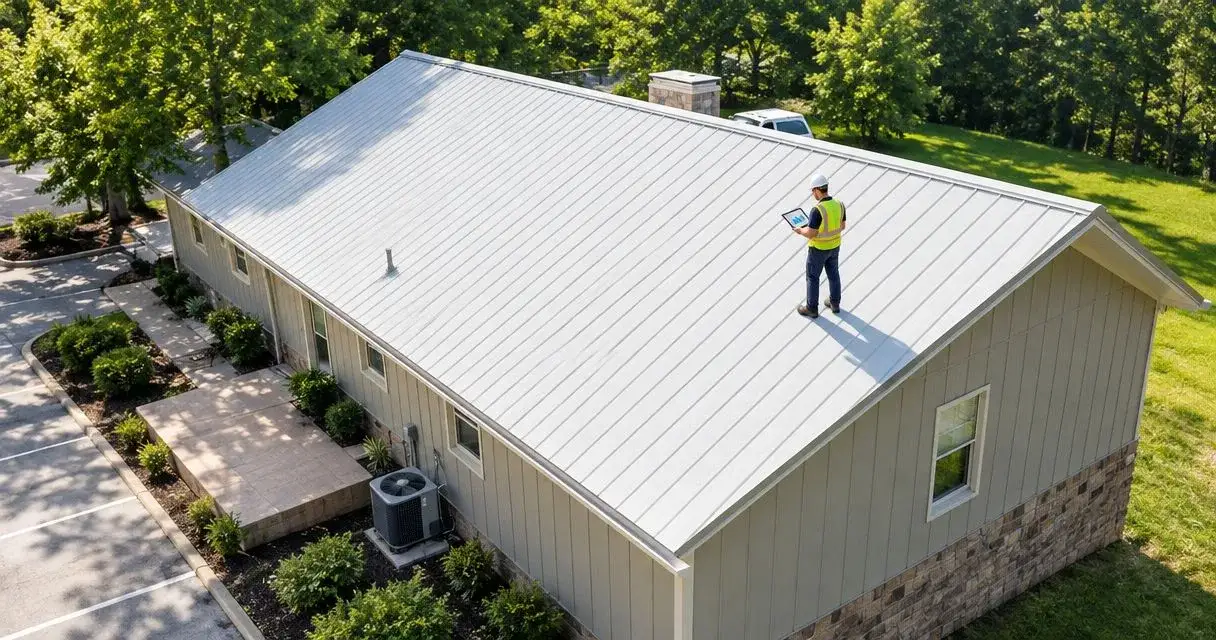
Most commercial roofs need a professional inspection twice a year, once in spring and once in fall, plus an extra check after any major storm. Roofs that are old, flat, or covered by a manufacturer warranty with inspection conditions can need more attention than that.
TL;DR
- Commercial roof inspection frequency: schedule two professional inspections a year, spring and fall.
- Add an inspection after hail, high wind, or a heavy storm, even if nothing leaks.
- Older roofs and flat roofs with ponding need closer, more frequent checks.
- Hero Roofing offers free roof inspections for commercial properties in the Atlanta metro.
How often should a commercial roof be inspected?
The standard answer is two scheduled inspections a year. Spring catches winter and storm-season damage before summer heat makes it worse. Fall catches summer wear and clears the roof before leaf and pine-needle season fills drains.
The two-a-year rhythm is the baseline most roofing professionals work from. Your roof’s age, material, and use change it. Here is how.
| Situation | Inspection frequency |
|---|---|
| Typical commercial roof in good condition | Twice a year (spring and fall) |
| After hail, high wind, or a major storm | As soon as it is safe, in addition to the schedule |
| Roof near the end of its expected life | Quarterly is a sensible target; ask your contractor |
| Flat roof with known ponding or drainage issues | Twice a year plus after every heavy rain stretch |
| Roof under a manufacturer warranty | Follow the inspection terms in your warranty paperwork |
Why commercial roof inspection frequency varies
No single number fits every building. These factors move the schedule:
- Roof type. Flat and low-slope systems such as TPO and other flat roofs hold water and debris longer than steep roofs, so drains, seams, and flashing need regular eyes.
- Roof age. The older the membrane, the faster small defects turn into leaks.
- Georgia weather. Spring hail, summer thunderstorms, intense heat, and humidity all stress membranes, sealants, and fasteners.
- Surrounding trees. Pine needles and leaves clog drains and gutters quickly.
- Rooftop equipment. HVAC units and vents mean more penetrations, more foot traffic, and more places for water to enter.
- Warranty terms. Some manufacturer warranties expect documented inspections. Read yours before you skip one.
What does a commercial roof inspection cover?
A proper inspection is more than a glance from the ground. It typically covers:
- Membrane condition: blisters, splits, punctures, and worn areas
- Seams and flashing around walls, curbs, and penetrations
- Drains, scuppers, and gutters for clogs and standing water
- Rooftop equipment and the areas around it
- Signs of interior moisture, such as ceiling stains
You get a written summary of what was found and what needs attention now versus later. That record also helps with budgeting and with any warranty or insurance conversation.
Should you inspect after a storm even if nothing leaks?
Yes. Hail and wind damage can be present long before a leak shows up inside. Inspect after any significant storm as soon as the roof is safe to access. Early findings are usually a repair; late findings can become a larger project. For damage that is already visible, see our storm damage repair service.
Is a twice-a-year inspection worth it?
For most buildings, yes. Catching a failed seam or clogged drain early is normally a small repair. Waiting until water gets into insulation or the interior is where costs grow. Regular inspections also feed a commercial roof maintenance plan, which helps you budget repairs and replacement instead of reacting to emergencies.
Can you inspect a commercial roof yourself?
You can do a limited check from the ground or a safe access point: look for stained ceilings, debris near drains, and visible sagging or ponding. Do not walk a commercial roof without proper safety equipment and training. Falls and membrane punctures are real risks. Leave the on-roof work to a professional.
FAQ
How often should a commercial roof be inspected?
Twice a year, in spring and fall, plus after major storms. Older roofs, flat roofs with ponding, and warranty-covered roofs may need more frequent or documented checks.
Do I need a commercial roof inspection after hail?
Yes. Hail can damage a membrane without causing an immediate leak. Have the roof inspected as soon as it is safe, so any damage is documented and repaired early.
What is the best time of year to inspect a commercial roof in Georgia?
Spring and fall. Spring catches storm and winter damage before summer heat; fall clears debris and prepares the roof for the rainy months.
Can I inspect my commercial roof myself?
You can check for ceiling stains and visible debris from safe vantage points. Walking the roof should be left to trained professionals because of fall risk and membrane damage.
Does roof age change how often I should inspect?
Yes. Roofs nearing the end of their service life develop problems faster, so more frequent inspections make sense. Ask your contractor to recommend a schedule after the first inspection.
Does Hero Roofing inspect commercial roofs?
Yes. Hero Roofing offers free roof inspections and handles commercial repair, replacement, coatings, and maintenance across the Atlanta metro.
One last thing
Photograph your roof at every inspection from the same spots. A year of dated photos shows how fast a seam or ponding area is changing, and that tells you whether a repair or a replacement budget is coming.
Related guides
- Best commercial roof coatings for Georgia’s heat and UV exposure
- How long does a roof replacement take?
Get your commercial roof checked
Hero Roofing is a family-owned, GAF Master Elite certified contractor based in Newnan. Book your free roof inspection and get a clear answer on what your roof needs and when.
Schedule your roof inspection
Free inspections from a local, family-owned roofing team.
