


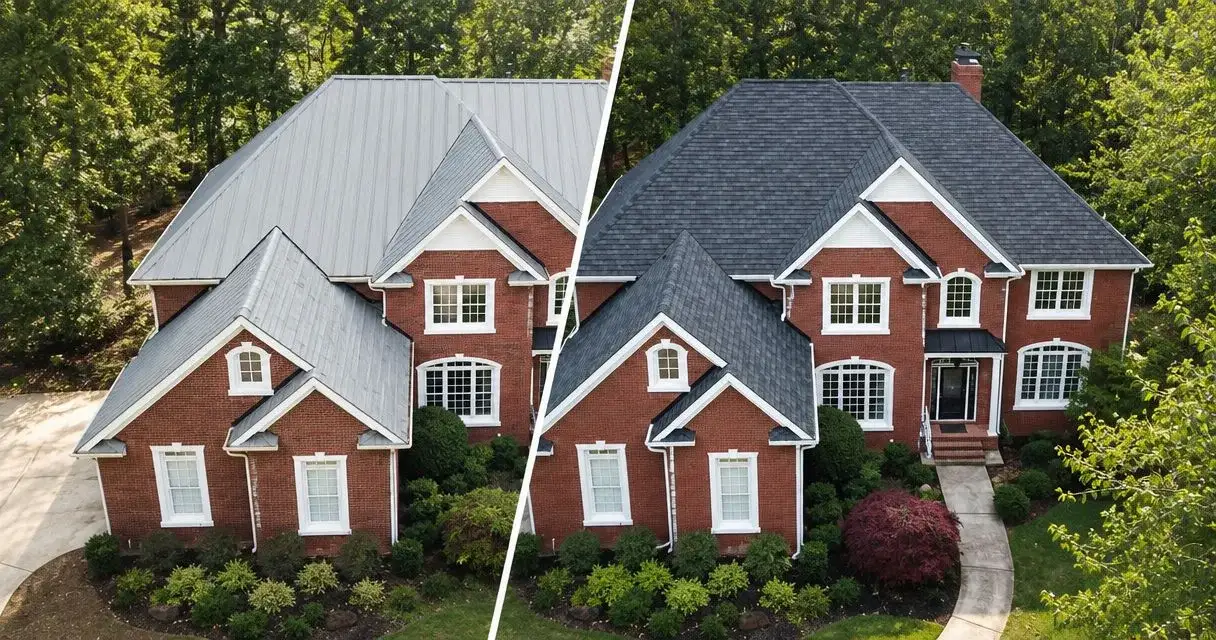
Yes, replacing gutters with a new roof is usually worth it when your gutters are old, sagging, leaking or pulling away from the fascia. If they are sound, correctly sloped and the right size, keep them. The roof crew has the edge of your roof open and the ladders up either way, so a gutter swap done then is mostly a decision about condition, not about extra labor.
The cost that the simple answer hides is the second visit. Gutters replaced later mean a second crew working along a brand-new roof edge, and that is where shingles and drip edge get scuffed or bent.
TL;DR
- Replace gutters with a new roof when they sag, leak, have loose hangers or rusted seams.
- Keep gutters that are straight, properly sloped, sized for your roof and firmly attached.
- Doing both at once avoids a second crew working along the finished roof edge.
- Hero Roofing checks gutter condition during a free roof inspection and recommends honestly.
Why this matters
Your roof and gutters work as one drainage system. The roof sheds water, the drip edge guides it off the edge, and the gutters carry it away from your fascia, siding and foundation. A new roof on top of a failing gutter line sends water to the same weak spots the old roof did.
Hero Roofing sees this on Georgia homes constantly: pine needles packed into valleys and gutters, summer storms that dump water fast, and gutters that were never sized for the roof they serve. A gutter system is a small part of the project, but it decides how well the new roof protects the rest of the house.
Is it worth replacing gutters with a new roof?
It is worth it when at least one of these is true. It is not worth it when none are.
| Situation | Verdict | Why |
|---|---|---|
| Sagging runs, loose hangers, pulling from fascia | Replace | Reattaching a worn system rarely lasts, and the fascia behind it may already be soft |
| Rust, cracked seams or repeated leaks at joints | Replace | Patches fail again, usually at the next heavy rain |
| Gutters overflow in normal rain | Replace or resize | Undersized gutters or poor slope will not fix themselves |
| Straight, tight, no leaks, drain properly | Keep | Replacing sound gutters only to match is optional, not required |
| Gutters are fine but you want guards | Add guards | Guards go on cleanly while the roof edge is accessible |
The honest trade-off: if your gutters are in good shape, replacing them adds cost without adding protection. A roof inspection tells you which column you are in.
What the roof crew sees that you cannot
From the ground, gutters look fine until they do not. On a roof replacement, the crew sees the full edge:
- Fascia condition. Gutters hide rotted or stained fascia boards. Rot gets repaired before the new drip edge goes on.
- Drip edge fit. Water should land inside the gutter, not behind it. Old gutters that sit too low or too far out miss the new drip edge.
- Slope. Gutters are generally set to fall about a quarter inch for every 10 feet of run toward the downspout. Settled or sagging runs hold standing water.
- Hanger spacing and fastening. Spikes and ferrules that have worked loose are common on older systems.
These are the problems that look cosmetic and turn into water behind the siding. Our team recommends an inspection rather than guessing, because the answer depends on what is actually on your roof edge.
Why replacing both at once saves hassle
Timing matters more than most homeowners expect. A few reasons to do both in one project:
- One crew, one schedule. You avoid scheduling a second contractor around the finished roof.
- No work along a fresh edge. Ladders, hangers and removed old gutters are hard on new shingles and drip edge when done afterward.
- Correct pairing. The gutter is positioned to catch water off the new drip edge, not the old one.
- Clean-up happens once. Debris, nails and old gutter sections are hauled away in a single cleanup.
If you want to understand how long the roof portion alone takes, see our guide on how long a roof replacement takes. Gutters add some time to the job but are a small fraction of it.
When you can skip replacing the gutters
Keeping your gutters is the right call in these cases:
- They are straight, tightly fastened and drain fully after rain.
- The fascia behind them is solid.
- They are sized correctly for your roof area and pitch.
- You are only doing a partial roof repair, not a full replacement.
In that case, have your gutters cleaned and checked, and move on. Hero Roofing would rather tell you to keep sound gutters than sell you a replacement you do not need.
What drives the cost of replacing gutters
We do not quote prices in articles, because they depend on your house. These are the factors that move the number:
- Linear feet of gutter around your roofline
- Gutter size, commonly 5-inch or 6-inch, and material
- Seamless versus sectional construction
- Number of downspouts and how many stories the house is
- Fascia repair needed before the gutters go on
- Whether you add gutter guards
For a local reference, see our breakdown of gutter costs in Newnan.
Should you add gutter guards at the same time?
For homes near pines and hardwoods, usually yes. Pine needles are one of the main reasons Georgia gutters clog, and the best time to install guards is when the roof edge is already open and the gutters are clean and new.
The trade-off is honest: guards reduce how often you clean, but they do not eliminate maintenance. Fine debris and pollen can still build on top of some designs. Our article on gutter guards for homes with heavy pine trees covers the options in more detail.
How do I know if my gutters need replacing?
Check these from the ground after a rain:
- Water spilling over the front edge instead of flowing to downspouts
- Streaks or stains on siding below the gutter line
- Gutters visibly bowing or separating from the house
- Standing water or plant growth inside the trough
- Peeling paint or soft spots on the fascia
Two or more of these usually means replacement is the better move than repair, especially if the roof is also due for replacement. When the roof is an architectural or 3-tab shingle roof near the end of its life (InterNACHI benchmarks are about 30 years and about 20 years, general figures and not promises), the gutters have often aged alongside it.
Does a new roof void or affect my gutter plans?
A new roof does not require new gutters. It does require that your gutters work with the new drip edge and edge details. If they do, they can stay. If they do not, they need adjusting or replacing so water does not run behind them. Your roof replacement estimate should address this edge detail directly.
FAQ
Should I replace gutters when I get a new roof?
Replace them if they are sagging, leaking, rusted or overflowing. If they are straight, tight and draining well, you can keep them. Replacing at the same time avoids a second crew working along the finished roof edge.
Can I replace gutters after the roof is done?
Yes. Gutters can be replaced at any time, but doing it later means ladders and hangers working against a new roof edge. Doing both together is simpler and gentler on the new shingles and drip edge.
Do new roofs need new gutters?
No. A new roof only needs gutters that sit correctly under the new drip edge and drain properly. Sound gutters that meet those conditions can stay.
Are gutter guards worth it with a new roof?
Often yes near pine and hardwood trees, because needles and leaves are what clog Georgia gutters. Guards lower cleaning frequency but do not remove maintenance completely.
What size gutters do I need?
Most homes use 5-inch or 6-inch gutters. Larger or steeper roofs and heavy-rain areas often do better with 6-inch. An inspection of your roof area and pitch gives a straight answer.
Is seamless better than sectional gutter?
Seamless gutters have fewer joints, which means fewer places to leak. Sectional systems can work but have more seams to maintain over time.
Will damaged fascia be fixed when gutters are replaced?
Soft or rotted fascia should be repaired before new gutters are fastened to it. Hanging new gutters on bad wood shortens how long they last.
One last thing
The most useful moment to decide about gutters is before the roof is torn off, not after. Ask your contractor to look at the fascia, drip edge and gutter slope as part of the roof estimate. If everything checks out, keep your gutters and put the budget toward the roof itself. If it does not, you will know before the new roof goes on rather than after the first heavy rain.
Get your gutters checked
Free roof inspection that includes a look at your gutter line.
Not sure whether your gutters should go with the roof? Hero Roofing will look at both and tell you plainly. Schedule a free roof inspection and our team will check your roof edge, fascia and gutters.
