


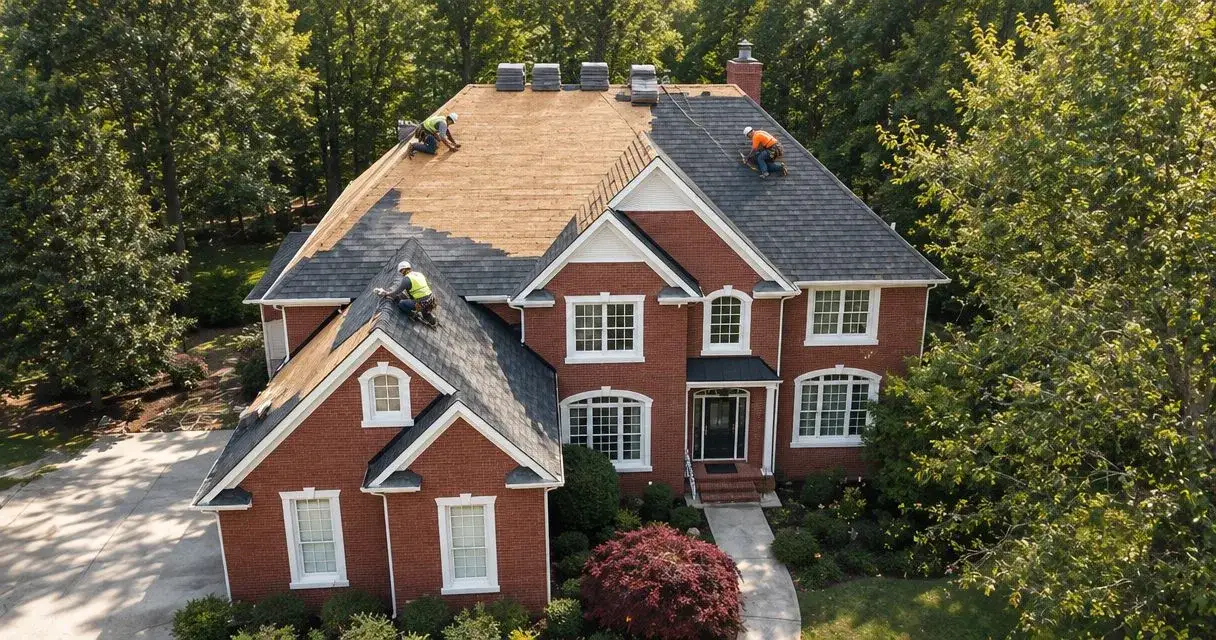
Most asphalt shingle roof replacement projects are completed within a day or two, according to Hero Roofing’s roof installation guidance. Larger roofs, other materials, damaged decking found during tear-off, or weather can extend that. This installation window is separate from scheduling, material delivery, and any remaining closeout work.
TL;DR
- Most asphalt shingle roof replacements take a day or two; larger roofs, other materials, decking damage, or weather extend timing.
- Hero Roofing provides roof replacement services for homeowners in Newnan and the greater Atlanta metro.
- Roof complexity, material, access, hidden damage, and weather determine the installation schedule.
- Ask what the estimated completion date includes and how schedule changes will be communicated.
Why this matters
You need a schedule you can use to plan work, parking, pets, and access to your home. A promise about installation alone does not tell you when materials arrive, when the driveway becomes available again, or when cleanup ends.
The existing roof also affects the work involved. Understanding whether a new roof can be installed over an old one helps you ask better questions about removal, preparation, and what the contractor needs to examine beneath the covering.
Judge the schedule by its scope, not just its speed. A useful estimate explains what happens before installation, what happens during it, and what counts as finished.
How long does a roof replacement take?
Most asphalt shingle roof replacements are completed within a day or two; your roof’s size, material, decking condition, and weather can extend that window. Ask for separate estimates for the active roofing work and the full project calendar so you do not mistake an installation window for a start-to-finish commitment.
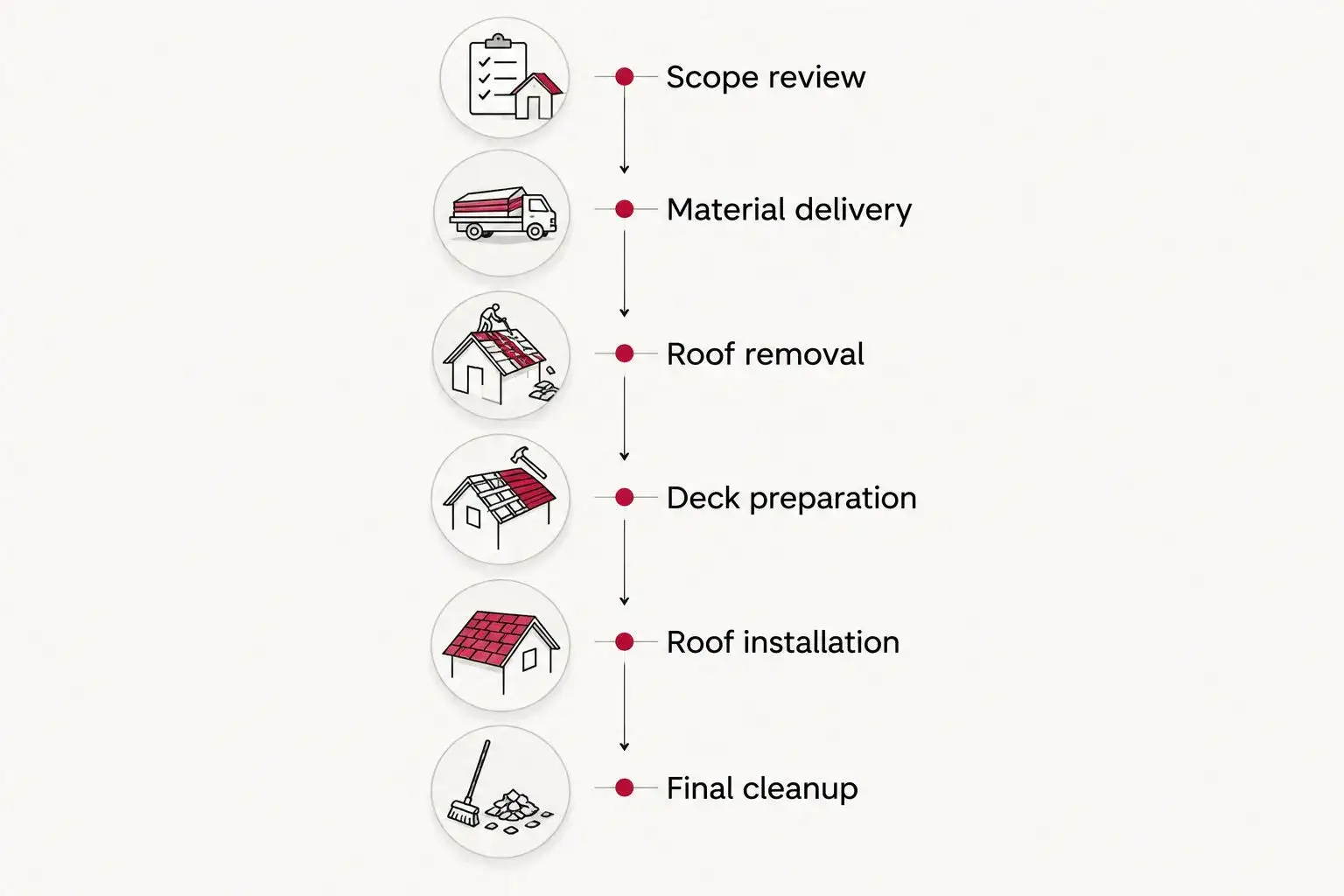
Use this sequence to understand what the estimate should cover:
- Scope review. Establish what will be removed, what will be installed, and which roof details need attention.
- Material delivery. Confirm material selection, delivery arrangements, and a safe place for supplies.
- Roof removal. Remove the existing covering included in the scope and examine the exposed roof deck.
- Deck preparation. Address damaged decking and prepare the surface for the specified roofing system.
- Roof installation. Install the roof covering and associated water-shedding details according to the agreed scope.
- Final cleanup. Remove project debris and equipment, then confirm whether any work remains outstanding.
These stages are a planning framework, not a description of a particular contractor’s operating procedure. Some activities overlap; others depend on the previous stage being complete.
The critical distinction is between a planned sequence and an unconditional deadline. Your contractor should explain which parts of the schedule are confirmed and which depend on weather or conditions revealed during removal.
Installation is part of the project timeline, not the entire timeline.
Installation time and total project time are different
An installation estimate describes the period when roofing work takes place. The total project timeline also accounts for decisions and arrangements that happen before the crew starts, plus anything required after the main covering is installed.
| Timeline | Best for | What it helps you plan | What it does not establish |
|---|---|---|---|
| Installation window | Planning around active roof work | Noise, property access, pets, and daily disruption | When preparation or closeout will finish |
| Full project calendar | Coordinating the entire replacement | Material delivery, work dates, cleanup, and remaining tasks | A guarantee against weather or hidden damage |
Ask for both timelines. Installation dates help you manage disruption, while the full calendar helps you understand when the project is actually complete.
For example, materials arriving at your home does not mean roof removal starts immediately. Likewise, a finished-looking roof does not tell you whether debris removal or an agreed finishing detail remains outstanding.
Ask the contractor to define completion in writing. You should know whether the stated finish includes cleanup, removal of equipment, and a review of any remaining items—not merely the last section of roof covering.
Why roof replacement timing varies
The factors below explain why a schedule for another house is not a dependable estimate for yours. They also give you a practical way to question a proposed timeline without guessing at crew productivity.
- Roof size and layout. More roof area means more material to remove and install. Valleys, intersecting roof sections, and changes in direction add detail work beyond the main roof surfaces.
- Roofing material. Different roof systems require different installation methods and details. Ask for a schedule based on the material you actually choose rather than a generic replacement estimate.
- Access and staging. Driveway space, landscaping, roof height, and the route for moving materials affect how the work is organized. Discuss delivery and debris-container placement before work begins.
- Existing roof condition. Removal exposes conditions that are not fully visible beforehand. Damaged decking requires attention before new roofing covers it.
- Weather and safe working conditions. Rain, wind, and other unsafe conditions affect roof work. In Georgia, discuss how the contractor will respond to thunderstorms and changing forecasts.
- Connected roof details. Chimneys, skylights, wall intersections, and other roof transitions require careful treatment. Include their agreed work in the schedule rather than treating them as afterthoughts.
None of these factors supports a reliable deadline by itself. The estimate needs to account for how they combine on your property.
What happens if damaged decking is uncovered?
Damaged decking changes the job because the new roof needs a suitable supporting surface. Covering a problem to preserve the original finish date is not an acceptable substitute for addressing it.
Before work starts, ask how the contractor handles conditions discovered after removal. You want to understand how the finding will be documented, how the proposed work will be explained, and how any schedule change will be communicated.
Useful questions include:
- What evidence will you show me if decking needs attention?
- How will you explain the additional scope before proceeding?
- Will the finding change the expected completion date?
- Who should I contact if I have questions during the work?
Keep the conversation focused on the actual condition and the required response. A broad allowance for unexpected work is not the same as an explanation of a specific finding.
How does Georgia weather affect the schedule?
Georgia thunderstorms and changing forecasts belong in the scheduling conversation before roof removal begins. Ask how weather affects the start decision and what protection is planned for areas being worked on.
A weather-related pause does not, by itself, tell you whether a project is being managed well. The useful questions concern communication, protection, and the revised work plan.
Ask when you will receive an update if the forecast changes. Also ask whether a delay affects only the next work period or changes the expected completion date.
Avoid treating a favorable forecast as a guarantee. A credible schedule includes a weather response, not just a preferred start date.
Does the roofing material change the timeline?
Roofing material changes the installation requirements, so it belongs in the estimate from the beginning. A schedule prepared before material selection needs confirmation once the system and scope are settled.
If you are still choosing a roof, review roofing materials for Georgia homes before asking the contractor to finalize the work schedule. The goal is to connect your selection with the actual installation requirements, not to choose solely for speed.
Ask how the proposed roof handles edges, penetrations, and transitions. Those details are part of the roofing system and should not disappear from the conversation because the main roof surfaces look straightforward.
Do not assume that a different material automatically means a better or worse schedule. The appropriate comparison is the complete proposed scope for your roof, including preparation and finishing work.
How should you prepare before roof replacement starts?
Prepare around the contractor’s stated access and staging needs rather than making assumptions about where supplies or equipment will go. Confirm the arrangements before delivery so you can move vehicles and outdoor belongings deliberately.
Start with these practical questions:
- Parking: Which areas need to stay clear during delivery and active work?
- Property access: Which entrances and outdoor routes should your household use?
- Pets: Where can pets stay away from noise, open gates, and work areas?
- Outdoor belongings: Which furniture, planters, or other movable items need relocating?
- Communication: Who provides updates, and how will you receive them?
Explain any access constraints early. A shared driveway, limited parking, or a household member who needs a particular entrance should be part of the planning discussion.
If you work from home, plan around roofing noise rather than expecting an ordinary workday. Ask which activities are scheduled so you can arrange calls or time away without relying on a guessed finish time.
What should a useful roofing schedule include?
A useful roofing schedule identifies the work window, the assumptions behind it, and the person responsible for updates. It also explains what happens when those assumptions change.
Look for clear answers to these points:
- The planned start and the conditions required to begin.
- The expected active installation window.
- Material delivery and equipment arrangements.
- The process for communicating newly discovered damage.
- Weather-related changes and revised timing.
- Cleanup, equipment removal, and outstanding work.
Ask the contractor to distinguish an estimate from a confirmed appointment. That wording matters when you are arranging time away from work or coordinating access with other people.
Hero Roofing is a local roof replacement option for homeowners in Newnan and the greater Atlanta metro. Its residential roofing services include replacement and inspections; a property-specific assessment is still necessary to establish the scope rather than assuming every roof follows the same schedule.
What should you ask if the replacement runs late?
Ask what changed, what work remains, and when the next update will arrive. A revised finish date is more useful when it comes with a clear explanation of the remaining tasks.
Separate the cause from the response. Weather or concealed damage explains a change in conditions; you still need to understand how the contractor plans to protect the work area and finish the agreed scope.
Keep your questions specific:
- Which task is preventing completion?
- Is the remaining work roofing, cleanup, or another agreed detail?
- Has the expected completion date changed?
- What information is needed before the schedule can be confirmed?
Avoid pressuring a contractor to cover unfinished preparation simply to preserve the original date. The objective is a properly completed roof, with clear communication about the disruption to your household.
FAQ
How long does a roof replacement take from start to finish?
Most asphalt shingle roof replacements are completed within a day or two of active work, but larger roofs, other materials, damaged decking found during tear-off, or weather can extend that. Ask for a full project calendar that includes preparation, delivery, installation, cleanup, and any remaining closeout work.
Does roof replacement timing include removing the old roof?
Roof removal belongs in the installation estimate when removal is part of the agreed scope. Confirm that the estimate also accounts for examining the exposed decking and addressing any documented damage.
Can I stay home while my roof is being replaced?
Confirm access and safety arrangements with your contractor before deciding to stay home. Roofing work creates noise and active work areas, so plan around pets, entrances, parking, and any need for quiet.
Will rain delay my roof replacement?
Rain can change the roof replacement schedule. Ask how the contractor decides whether to start, protects work in progress, and communicates revised timing.
Does a larger crew guarantee a faster roof replacement?
A larger crew does not establish a guaranteed completion date. Roof layout, access, material requirements, weather, and the condition of the exposed decking still affect the work.
Does Hero Roofing provide roof replacement and inspections?
Hero Roofing provides residential roof replacement and free roof inspections in its service area. Ask for an assessment of your roof and an explanation of the proposed scope before relying on a completion estimate.
What should be finished before a roof replacement is called complete?
Completion should match the written scope, including the agreed roofing work and cleanup. Ask whether equipment removal or any finishing items remain before treating the project as closed.
One last thing
The most useful scheduling question is not just when the crew will leave. Ask: What exactly will be finished when you call the project complete?
That question separates the installation milestone from the result you actually need: completed roofing work, cleared access, and a clear account of any outstanding items. It also gives you a practical reference if the schedule changes.
Ask Hero Roofing about a free roof inspection and a replacement schedule based on your roof’s actual condition.
