


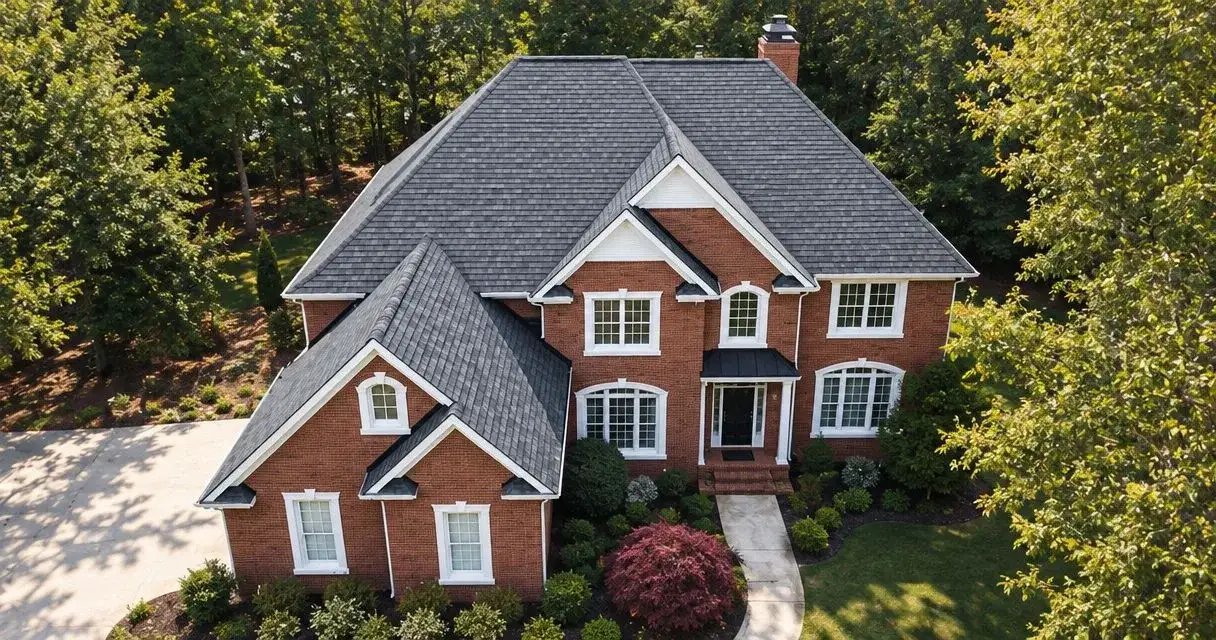
Best overall: architectural asphalt shingles. Best for a prominent, highly visible roof: luxury asphalt shingles. Best for a simple, flat shingle pattern: three-tab asphalt shingles. The best shingle types for steep slope roofs depend on the roof’s measured pitch, the selected product’s installation instructions, and the appearance you want—not thickness alone.
TL;DR
- Architectural asphalt shingles are the default recommendation among the best shingle types for steep slope roofs.
- Luxury asphalt shingles suit prominent rooflines where deeper texture matters; verify weight and installation requirements.
- Three-tab asphalt shingles suit homeowners who want a flat, repeating pattern, not a dimensional appearance.
- Hero Roofing offers roof inspections to help Georgia homeowners make a condition-based decision.
Why this matters on a Georgia roof
A steep roof puts more of the shingles in view, but appearance is only part of your decision. Roof pitch also affects safe access, installation details, and whether the selected shingle’s fastening instructions change.
Georgia heat, humidity, pine debris, and summer storms make drainage and sound installation practical priorities. A more decorative shingle does not fix weak decking, blocked drainage paths, or poorly detailed flashing. For a separate look at aging expectations, read the guide to how long asphalt shingles last in Georgia.
Hero Roofing is best for Georgia homeowners who want a roof inspection before choosing a shingle type. Keep the material decision tied to the roof you actually have, rather than choosing from a sample board alone.
What makes the best shingles for steep slope roofs?
Use these criteria before comparing the options:
- Pitch compatibility: The exact shingle must be approved for your measured slope under its installation instructions and applicable local requirements.
- Fastening instructions: Check nail placement, nail quantity, and any steep-slope attachment requirements for the selected product.
- Roof condition: Decking, flashing, ventilation, and existing roof layers affect the replacement plan.
- Roofline appearance: Compare flat patterns, dimensional texture, and deeper profiles from the ground.
- Site exposure: Discuss wind exposure, overhanging trees, and debris collection without treating a material category as a performance rating.
- Project complexity: Valleys, dormers, penetrations, access, and material handling affect installation work.
These criteria separate a suitable shingle from an attractive sample. Ask for the exact product instructions with the proposal so you can connect the recommendation to your roof.
Best shingle types at a glance
| Shingle type | Best for | Standout feature | Key limitation |
|---|---|---|---|
| Architectural asphalt | A dimensional appearance without choosing a specialty profile | Laminated construction creates layered texture | The category name alone does not establish wind or impact performance |
| Luxury asphalt | Prominent rooflines where a more pronounced profile matters | More elaborate shapes and shadow lines, depending on the product | Weight, accessory requirements, and detailing need product-specific review |
| Three-tab asphalt | A simple, flat, repeating shingle pattern | Defined tabs create a regular layout | Less visual depth than dimensional shingles |
The table compares shingle categories, not interchangeable products. Two shingles within the same category can have different application instructions, ratings, and accessory requirements.
1. Architectural asphalt shingles: best for everyday roof replacement
Architectural shingles use laminated construction to create a dimensional surface rather than the flat, repeating tabs of a three-tab shingle. They are the starting point when you want visible texture without making an elaborate shingle profile the main feature of your home.
On a steep Georgia roof, that texture becomes part of the house’s street-facing appearance. Compare a full roof example or a larger sample with your siding and trim; a small sample does not show the repeating pattern across a broad roof plane.
Architectural asphalt shingles pros
- Layered texture gives visible roof planes more depth than a flat tab pattern.
- The dimensional appearance works as a middle ground between simple tabs and more elaborate luxury profiles.
- Product-specific documentation lets you check fastening requirements and published classifications before selecting a shingle.
Architectural asphalt shingles cons
- Architectural construction does not automatically establish a particular wind or impact classification.
- Dimensional texture does not suit every homeowner’s preferred appearance.
- Better-looking shingles still depend on proper decking, flashing, and installation.
Best for: You want a dimensional asphalt roof and prefer to start with a straightforward material comparison rather than a specialty appearance.
Ask the contractor to identify the proposed shingle, matching ridge components, and required installation details. A proposal that says only architectural shingles leaves too much of the material choice undefined.
Verdict: Buy architectural shingles as your default shortlist choice, subject to roof condition and product approval for the measured slope.
2. Luxury asphalt shingles: best for highly visible rooflines
Luxury asphalt shingles emphasize appearance through more elaborate profiles, shapes, or shadow lines. Some designs imitate the visual pattern of slate or wood shakes, but they remain asphalt shingles and require their own installation details.
This category deserves a closer look when steep roof planes form a large part of your home’s visible exterior. Choose it because the specific profile improves the house’s appearance—not because the word luxury proves better storm performance.
Luxury asphalt shingles pros
- Pronounced profiles can make broad, visible roof planes more visually distinct.
- Different shapes offer an alternative to the standard dimensional shingle pattern.
- A deliberate roof profile can complement the proportions of dormers, gables, and other roof features.
Luxury asphalt shingles cons
- Material weight varies; confirm the selected product’s requirements rather than assuming every roof is suitable.
- Complex shapes and layouts require careful attention to the manufacturer’s application details.
- A bold profile can compete with an already busy exterior.
Best for: Your roof is a major architectural feature, and you want a more deliberate profile than a standard dimensional shingle provides.
Review the proposed field shingles alongside ridge and hip details. Those accessories are especially visible on steep roofs, and their appearance belongs in the material decision rather than becoming an afterthought.
Verdict: Buy luxury shingles for a specific appearance you want; skip them if the recommendation rests only on a premium label.
3. Three-tab asphalt shingles: best for a flat, regular pattern
Three-tab shingles use cutouts to create a regular tab pattern across the roof. They provide a flatter appearance than laminated architectural shingles and suit homeowners who deliberately prefer that simpler look.
A steep slope does not make three-tab shingles automatically unsuitable. The deciding questions remain whether the exact product permits the application and whether its documented characteristics meet the project’s requirements.
Three-tab asphalt shingles pros
- A flat surface creates a simple, repeating roof pattern.
- The regular layout suits homeowners who do not want pronounced dimensional texture.
- The profile provides a clear visual alternative when comparing asphalt shingle samples.
Three-tab asphalt shingles cons
- The surface offers less visual depth on highly visible roof planes.
- A similar-looking replacement does not guarantee a match to weathered existing shingles.
- The category name does not tell you the product’s wind classification or steep-slope fastening requirements.
Best for: You specifically want a flat tabbed appearance and have confirmed that the selected product suits the roof.
Do not select three-tab shingles solely because the existing roof uses them. A replacement gives you an opportunity to compare profiles, while a repair requires a separate assessment of compatibility and surrounding condition.
Verdict: Buy three-tab shingles for an intentional flat-profile choice; skip them when your goal is a layered, dimensional appearance.
Roof pitch: what the numbers actually mean
Roof pitch describes vertical rise relative to horizontal run. A 6:12 pitch rises 6 inches over 12 inches of horizontal distance; the measurement describes geometry, not permission to walk on the roof.
The International Residential Code, Section R905.2.2, sets a minimum slope of 2:12 for asphalt shingles. The same section requires double underlayment application for slopes from 2:12 up to 4:12. Your locally adopted requirements and the selected manufacturer’s instructions govern the actual installation.
A roof above that minimum still needs product-specific review. Some shingle instructions include additional fastening or hand-sealing requirements for especially steep applications. Do not substitute a general nail-count rule from an unrelated product.
Keep these separate when reviewing a proposal:
- Measured pitch: The roof’s actual rise and run.
- Product instructions: The application requirements for the exact shingle.
- Local requirements: The code provisions applicable to the property.
Those details answer different questions. A material category alone answers none of them.
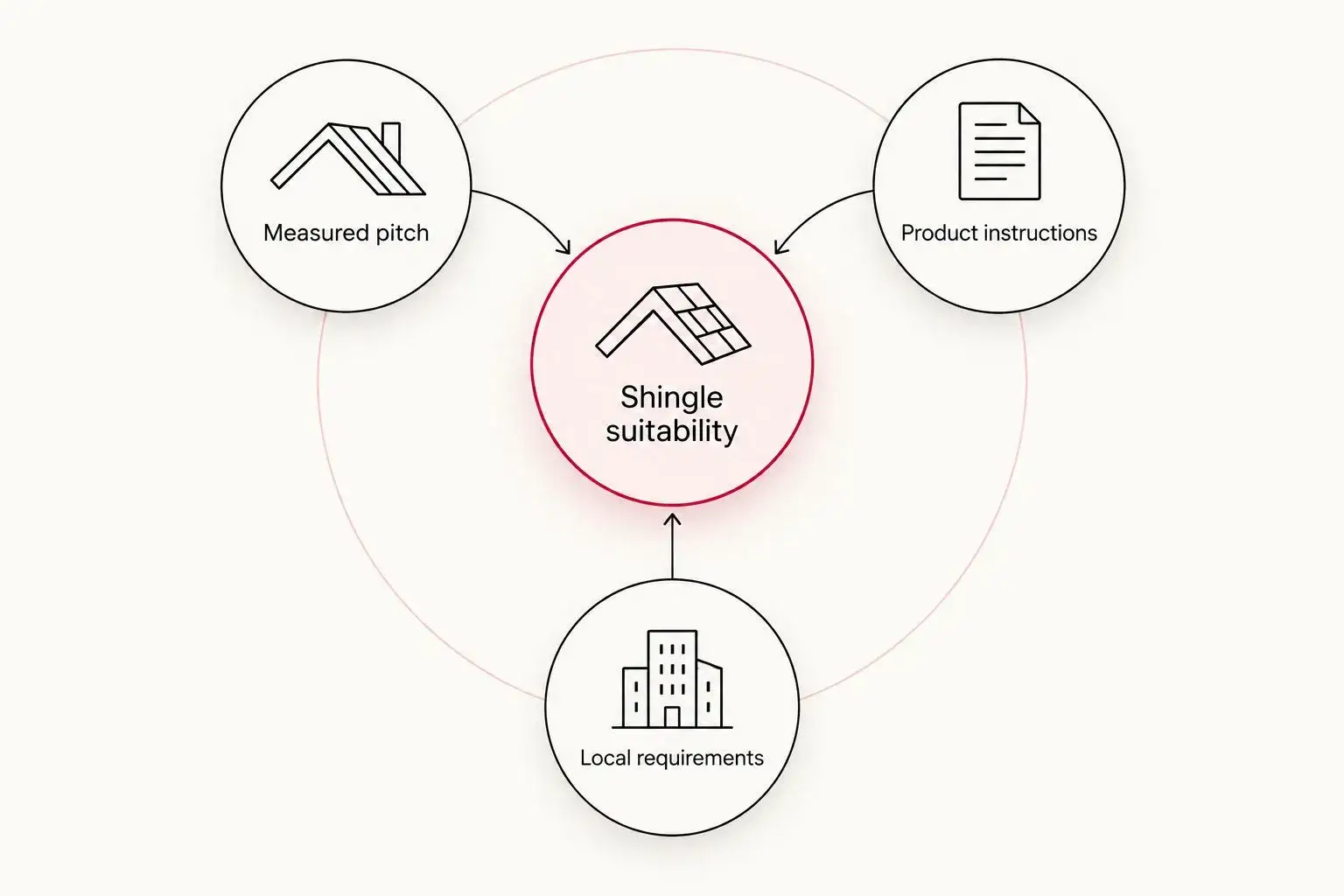
A suitable shingle must fit the roof geometry and the applicable installation requirements.
What Georgia conditions change about your choice
Humidity and shaded roof sections
Ask whether the selected product has documented algae-resistance features and what those features address. Algae resistance is not the same as protection against leaks, debris buildup, or moisture problems elsewhere in the roof assembly.
Compare shaded and sun-exposed roof planes when discussing the existing roof’s condition. Do not assume that a surface stain, by itself, establishes whether shingles need replacement.
Pine needles and roof intersections
Pine needles and leaves collect at roof intersections and drainage points. A steeper main roof does not eliminate valleys, areas behind penetrations, or gutters where debris can remain.
Keep maintenance access in the conversation. A decorative profile should not distract from how the roof drains or how accumulated debris will be addressed safely.
Wind and summer storms
Ask for the exact shingle’s published wind and impact classifications, where applicable. Architectural, luxury, and three-tab describe construction or appearance; they are not substitutes for those classifications.
Also ask how the proposed installation follows the manufacturer’s fastening and sealing instructions. Choosing a shingle and installing it correctly are separate parts of the same decision.
What to confirm before accepting a proposal
Hero Roofing is a GAF Master Elite certified contractor. Our team offers asphalt shingle roofing and roof replacement services, but the material choice should follow the roof’s condition. You should be able to understand why a particular shingle belongs on your home without decoding a page of unexplained product terms.
Use this checklist to keep proposals comparable:
- Exact material: Identify the shingle by its supplied manufacturer and product name.
- Roof preparation: Explain the plan for existing layers and how exposed decking will be assessed.
- Water-shedding details: Identify the approach to valleys, roof edges, penetrations, and flashing.
- Attachment: State that installation follows the selected product’s requirements for the roof’s slope and conditions.
- Accessories: Identify compatible starter and ridge materials rather than leaving them unspecified.
- Access and cleanup: Explain how the work area, landscaping, and material handling will be managed.
Steep access, roof complexity, decking work, and selected materials all affect project scope. Compare those details before treating two proposals as equivalent.
How these shingle types are ranked
This ranking prioritizes application suitability, appearance, and installation requirements. Architectural shingles take the default position for their dimensional appearance; luxury shingles serve a more design-specific choice; three-tab shingles serve homeowners who prefer a flat pattern.
The ranking is a buying framework, not a product test or a promise of storm performance. The exact product and your roof’s condition determine the final recommendation.
Which shingle type should you choose?
Start with architectural asphalt shingles if you are undecided. Move to luxury shingles when you can identify a specific profile that improves a prominent roofline. Choose three-tab shingles when a flat, repeating pattern is the appearance you actually want.
Keep the decision in that order: confirm suitability, compare profiles, then review the complete installation scope. Do not let an appealing sample settle questions about decking or fastening.
FAQ
What are the best shingle types for steep slope roofs?
Architectural asphalt shingles are the default shortlist choice for a dimensional appearance. Luxury shingles suit more prominent profiles, while three-tab shingles suit a flat, repeating pattern; every choice must meet the exact product’s slope requirements.
Are architectural shingles automatically better in storms?
No. Architectural construction alone does not establish wind or impact performance. Compare the exact product’s published classifications and installation requirements.
Can three-tab shingles be installed on a steep roof?
Three-tab shingles are suitable only where the selected product’s instructions permit the application. Confirm the measured pitch and any additional fastening or sealing requirements before choosing them.
What is the minimum pitch for asphalt shingles?
The International Residential Code, Section R905.2.2, sets a minimum slope of 2:12 for asphalt shingles. The applicable local requirements and manufacturer’s instructions must also be satisfied.
Do luxury shingles last longer just because they are thicker?
Thickness alone does not establish service life. Product design, roof conditions, exposure, and installation all matter, so do not treat the luxury label as a lifespan promise.
What makes a steep-slope shingle project more involved?
Access, roof geometry, material handling, decking condition, and installation requirements affect the work. Valleys, dormers, and penetrations add details that belong in the written scope.
Can Hero Roofing help me choose a shingle type?
Yes. Hero Roofing provides roof inspections and asphalt shingle roofing services. An inspection helps connect the material discussion to your roof’s condition rather than an appearance-only choice.
One last thing
Ask to see the proposed ridge detail alongside the field shingle sample. On a steep roof, the ridges and hips help define the entire outline; choosing the main shingle without considering those components leaves part of the appearance undecided.
Related guides
Schedule a free roof inspection with Hero Roofing to compare shingle options against your roof’s condition and pitch.
