


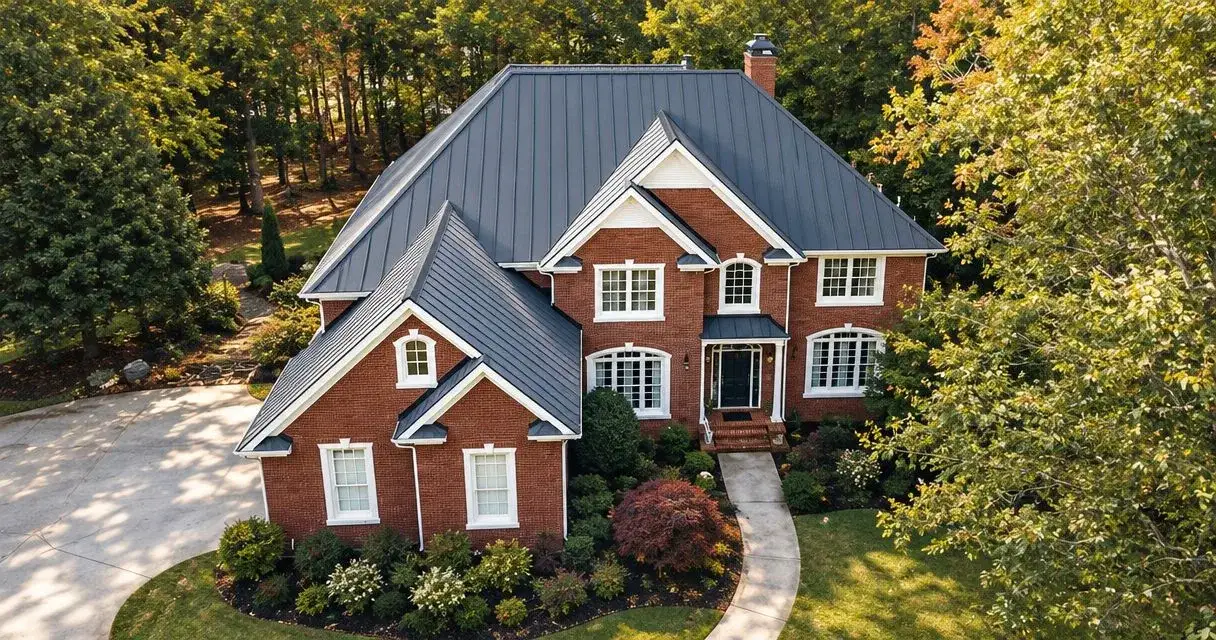
Best overall: repair a sound original roof. Best for replacing original slate: natural slate. Best for a traditional metal profile: standing-seam metal. The best roofing options for historic homes in Georgia depend on the roof’s original material, visible details, structural condition, and any applicable preservation requirements—not simply the age of the house.
TL;DR
- The best roofing options for historic homes in Georgia start with repairing sound original material, not automatically replacing it.
- Natural slate, standing-seam metal, and clay tile belong on homes whose original roof details support those choices.
- Synthetic roofing and asphalt shingles require careful comparison of profile, texture, and visible details.
- Hero Roofing offers historic-home roofing guidance through roof inspections; material selection should follow the roof’s actual condition.
Why this matters
A historic roof does more than keep rain outside. Its shape, surface texture, ridge details, and edges help define the house. Replacing that roof with a different material can change its appearance even when the color looks close.
Georgia’s humidity, pine debris, and summer storms also make drainage and detailing part of the decision. The broader roofing materials guide for Georgia homes covers general material choices; this guide focuses on preserving the character of an older house.
Hero Roofing is a roofing contractor for Georgia homeowners who need an inspection before choosing repairs or replacement for a historic home. A material recommendation should follow the evidence on your roof, not a photograph of a similar house.
What makes the best roof for a historic Georgia home?
Use these criteria before comparing materials:
- Historic fit: Match the documented original material, exposure, pattern, and surface texture where practical.
- Repair potential: Separate isolated failures from widespread deterioration before deciding to remove original roofing.
- Structural suitability: Confirm that the existing framing can support the proposed roof assembly.
- Water management: Account for valleys, chimneys, roof-to-wall intersections, and the path into gutters.
- Maintenance access: Consider how the roof will be inspected and repaired without damaging surrounding materials.
- Local requirements: Confirm whether a historic district or preservation commission reviews changes before ordering materials.
The National Park Service’s Preservation Brief 4: Roofing for Historic Buildings supports identifying a roof’s historic character and investigating deterioration before choosing treatment. That preservation-first approach is the basis for the ranking below.
Historic roofing options at a glance
| Rank and option | Best for | Standout feature | Key limitation |
|---|---|---|---|
| 1. Repair original roofing | Sound roofs with localized defects | Retains surviving historic material | Does not solve widespread material failure |
| 2. Natural slate | Replacing a documented slate roof | Distinct stone texture and individual pieces | Requires structural review and specialized handling |
| 3. Standing-seam metal | Homes with documented standing-seam roofing | Repeats a recognizable seam pattern | Modern profiles can look different from historic metal |
| 4. Synthetic slate or shakes | Evaluating substitutes for slate or wood | Offers alternative versions of traditional shapes | Appearance and installation requirements vary by product |
| 5. Cedar shingles or shakes | Homes with documented wood roofing | Preserves a traditional wood surface | Requires attention to moisture, debris, and maintenance |
| 6. Asphalt shingles | Homes with documented asphalt roofing | Suits roofs historically designed for shingles | Does not reproduce slate, tile, or metal details |
| 7. Clay tile | Homes with documented clay tile roofing | Retains distinctive curves and roof-edge details | Weight and matching profiles need careful evaluation |
1. Repair original roofing: best for retaining historic material
Repairing an existing roof ranks first when its main field remains serviceable and defects are localized. A leak near a chimney does not, by itself, establish that every slate, tile, shingle, or metal panel needs replacement.
Start by separating the roof covering from its connections. Flashing, fasteners, underlayment, and drainage details can fail differently from the visible material. Repair scope should identify the actual defect rather than assume the entire assembly has reached the same condition.
Original roof repair pros:
- Keeps surviving historic material in place.
- Preserves established patterns, edges, and weathered texture.
- Avoids replacing sound roofing solely because one area leaks.
Original roof repair cons:
- Matching materials are not always straightforward to identify.
- Repeated failures across the roof can make isolated repairs impractical.
Best for: A roof with localized damage and substantial sound material remaining.
Verdict: Hold onto sound original roofing; repair documented defects instead of replacing by default.
2. Natural slate: best for replacing a documented slate roof
Natural slate is the strongest historical match when evidence shows the house originally had slate. Color alone is not enough: piece size, thickness, exposure, laying pattern, and ridge treatment all affect the finished appearance.
Do not assume that an old house can support slate simply because it looks substantial. Alterations, deterioration, and changes to the roof assembly require evaluation. Chimney and valley details also deserve attention before a material decision becomes a purchase.
Natural slate pros:
- Retains the texture of a stone roof.
- Allows individual pieces to form the historic laying pattern.
- Supports a close visual match when the original slate is documented.
Natural slate cons:
- Requires confirmation of structural suitability.
- Needs specialized installation and careful access for repairs.
- Replacement pieces must be selected for more than color.
Best for: A documented slate roof where the structure and project scope support like-for-like replacement.
Verdict: Buy natural slate for an appropriate slate restoration—not as a generic upgrade for every old house.
3. Standing-seam metal: best for a documented metal-roof profile
Standing-seam metal belongs high on the list when the house’s original roofing used that profile. The raised seams create a visible rhythm across the roof, so panel width and seam shape matter as much as the finish.
Compare the proposed roof with historic photographs or surviving sections. A modern panel system does not automatically reproduce an older metal roof, and exposed-fastener panels are not the same visual treatment as standing seam.
Standing-seam metal pros:
- Can preserve a documented standing-seam appearance.
- Creates a consistent panel pattern across simple roof planes.
- Offers a clear material direction when historic metal survives.
Standing-seam metal cons:
- Modern seams and trim can change the roof’s appearance.
- Valleys, penetrations, and material connections need careful detailing.
- A different metal profile is not a like-for-like substitute.
Best for: A home with evidence of standing-seam roofing and details that suit the proposed assembly.
Verdict: Buy a historically appropriate metal profile; skip panels chosen only because they share a similar color.
4. Synthetic slate or shakes: best for evaluating a substitute
Synthetic roofing provides alternatives shaped to resemble slate or wood. It belongs on a historic-home shortlist when you need to evaluate a substitute rather than assume that the original material is the only workable choice.
Judge the exact product, not the category name. Thickness, edges, repeating patterns, surface sheen, weight, and installation instructions vary. A small sample also reveals less than a larger arrangement showing how the pieces repeat across a roof.
Synthetic roofing pros:
- Provides alternative interpretations of traditional slate and shake shapes.
- Allows comparison when original-material replacement presents constraints.
- Gives you a defined product assembly to evaluate with your contractor.
Synthetic roofing cons:
- Surface texture and repeating patterns can differ from the original.
- Suitability cannot be inferred from the word synthetic alone.
- Preservation acceptance requires confirmation where review applies.
Best for: A project evaluating a specific substitute against documented historic details.
Verdict: Wait until the exact product, appearance, and applicable review requirements are confirmed.
5. Cedar shingles or shakes: best for documented wood roofing
Cedar belongs on the shortlist when wood roofing is part of the house’s documented character. Shingles and shakes are not interchangeable visual choices: their surfaces and finished patterns differ.
For a Georgia home, discuss tree cover, debris collection, moisture exposure, and maintenance access before choosing wood. A roof below heavy pine cover presents a different upkeep challenge from an open roof with clear drainage paths. Neither setting removes the need for correct installation.
Cedar roofing pros:
- Preserves a traditional wood-roof appearance.
- Provides the texture associated with the selected shingle or shake type.
- Can match documented historic material and patterns.
Cedar roofing cons:
- Requires attention to debris and moisture conditions.
- Shakes chosen for a rustic appearance can misrepresent an originally smoother shingle roof.
- Local requirements and the proposed assembly need confirmation.
Best for: A home with evidence of wood roofing and an owner prepared for its maintenance needs.
Verdict: Buy cedar when wood is historically appropriate and the maintenance plan fits your property.
6. Asphalt shingles: best for historically appropriate asphalt roofs
Asphalt shingles are a sensible historic-home choice when asphalt is documented and the replacement respects the original roof’s appearance. An old house does not automatically require slate, wood, or metal.
Compare exposure, thickness, shadow lines, and color variation rather than assuming a more textured shingle is a better match. A heavily layered profile can change the appearance of a roof that originally had a flatter surface.
Asphalt shingle pros:
- Fits homes with documented asphalt roofing.
- Offers distinct profile and color choices to compare.
- Avoids introducing an unrelated material merely to make the house look older.
Asphalt shingle cons:
- Does not reproduce the construction details of slate, tile, or metal.
- Strong shadow lines and blended colors can alter historic character.
- Material selection does not resolve damaged decking or flashing.
Best for: A historic home whose documented roof material and architectural details support asphalt shingles.
Verdict: Buy the appropriate asphalt profile; skip imitation effects that conflict with the house.
7. Clay tile: best for preserving an existing tile-roof character
Clay tile is a strong choice when the house was designed around tile roofing. Curves, overlap, ridge pieces, and roof-edge treatments create a distinctive appearance that another material does not simply reproduce.
Identify the existing profile before comparing replacements. A different tile shape can change both the appearance and the way components fit together. Structural suitability and the condition of the underlying assembly also belong in the decision.
Clay tile pros:
- Preserves the characteristic shape of a documented tile roof.
- Retains distinctive ridge and edge treatments.
- Allows material selection around surviving original examples.
Clay tile cons:
- Requires confirmation that the structure suits the proposed assembly.
- Matching replacement profiles needs careful investigation.
- Walking and repair access require care to avoid breakage.
Best for: A documented clay tile roof with suitable structure and a compatible replacement plan.
Verdict: Buy matching clay tile for the right house; skip it as an unsupported aesthetic conversion.
How these options are ranked
This ranking puts retention of sound material first, followed by historically appropriate replacement. It does not rank materials by a claimed universal lifespan or assume that a heavier, more textured roof is better.
The deciding questions are historical fit, repair potential, structural suitability, water management, and maintenance. National Park Service Preservation Brief 16: The Use of Substitute Materials on Historic Building Exteriors provides additional context for evaluating substitutes rather than treating resemblance alone as sufficient.
Which roofing option should you choose?
Keep and repair sound original material whenever the roof’s condition supports it. If replacement is necessary, start with the documented original material and visible details, then evaluate structure, installation, maintenance, and applicable local review.
Bring these items to your roofing discussion:
- Historic photographs or records showing the roof.
- Photos of surviving roof edges, ridges, valleys, and details.
- A description of leaks, previous repairs, and recurring debris.
- Any written historic-district requirements you have received.
Ask Hero Roofing to explain which findings support repair, which support replacement, and which need further evaluation. That separates a material preference from a roof-specific recommendation.
FAQ
What’s the best roofing material for a historic home in Georgia?
The best choice is usually sound original roofing retained through appropriate repairs, or a replacement that matches documented historic material and details. Structure, drainage, maintenance, and applicable preservation review determine whether that choice fits your house.
Should I replace an old roof just because it leaks?
A leak alone does not establish that the entire roof needs replacement. The cause can involve a localized defect, flashing, or another part of the roof assembly, so the decision should follow identified conditions.
Is standing-seam metal appropriate for every historic house?
No. Standing-seam metal is most appropriate when the house’s history and roof details support that profile. Modern panel widths, seams, and trim still need comparison with the documented roof.
Can I use synthetic slate on a historic home?
Synthetic slate is an option to evaluate, not an automatic substitute for natural slate. Compare the exact product’s appearance and installation requirements, and confirm applicable preservation requirements before selection.
Are asphalt shingles wrong for a historic house?
No. Asphalt shingles are appropriate when the house’s documented roofing and architectural details support them. Choose the profile and exposure deliberately rather than assuming added thickness improves historical accuracy.
How much does a historic roof replacement cost?
The scope depends on the selected material, roof geometry, access, decking condition, flashing, and the work needed to preserve historic details. A roof-specific proposal should identify those components rather than provide a material-only comparison.
Does a historic district have to approve my roof?
Confirm the requirements with the local preservation office before changing roofing materials or visible details. Do not assume that rules for another Georgia neighborhood apply to your property.
One last thing
Photograph the roof edges and ridge before any original material is removed. Those details can preserve useful evidence about the roof’s pattern and construction that a distant street photograph misses. Ask that the proposed work identify which visible details will stay and which will change.
Related guides
- Can you install a new roof over an old one?
- How long do asphalt shingles last in Georgia?
- Best metal roofing colors for Georgia homes
Contact Hero Roofing to schedule a free roof inspection and discuss the roofing options that fit your historic home.
